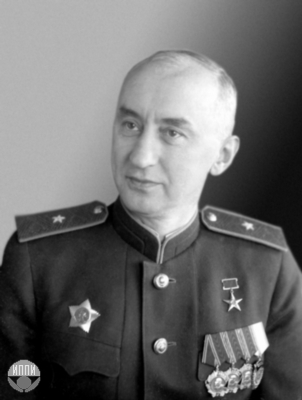
Vladimir Yakovlevich
Klimov
1892-1962
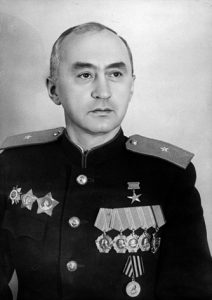
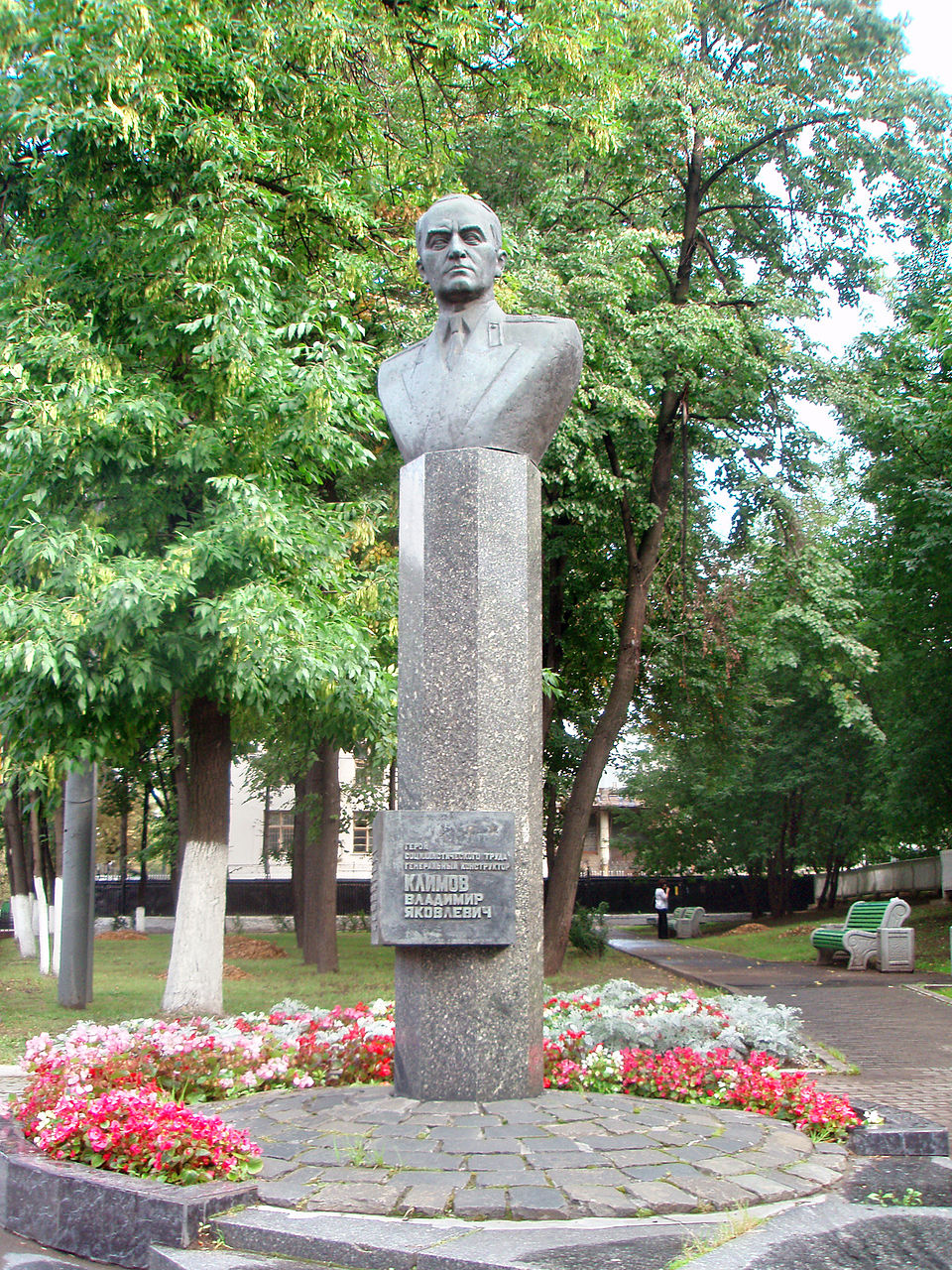
Vladimir Yakovlevich Klimov was a Soviet scientist in the field of aircraft engine manufacturing, a designer of aircraft engines, a Major General of the Engineering and Aviation Service, and an academician of the USSR Academy of Sciences. He was twice awarded the title Hero of Socialist Labor and was a recipient of four Stalin Prizes. This outstanding designer and scientist was one of the founders of the legendary engines that powered the fighter aircraft of the Great Patriotic War and the first jet aircraft of the Cold War. His legacy is not merely a collection of technical developments, but the very foundation upon which the power of Soviet aviation was built. Klimov’s path into aviation began with an excellent fundamental education: in 1918, he graduated from the legendary Moscow Higher Technical School (MVTU). However, his talent was not limited to blueprints and calculations. The young engineer quickly proved himself to be an effective organizer and strategist. Between 1918 and 1924, he headed the aircraft engine department within the Supreme Council of the National Economy (VSNKh). Subsequently, from 1924 to 1935, he represented the interests of the USSR in Berlin and Paris, where he was involved in the procurement of advanced foreign technologies. In parallel, Klimov generously shared his knowledge by teaching at the country’s leading technical universities, including the MVTU, the Zhukovsky Academy, and the Moscow Aviation Institute (MAI). A turning point came in 1935 when Klimov took charge of the design bureau at Plant No. 26 in Rybinsk (later evacuated to Ufa). It was here, under his leadership, that the famous M-100 and VK series piston engines were born. These engines became the “hearts” of the Yakovlev and Lavochkin fighters, as well as high-speed bombers. They withstood the harshest trials of war, helping to secure superiority for Soviet aviation in the skies. However, Klimov was looking to the future. In the post-war years, while leading the design bureau in Leningrad (now JSC “Klimov”), he made another breakthrough. Under his direction, one of the world’s first production turbojet engines with an afterburner, the VK-1F (1951), was created. This engine propelled the MiG-17 fighter to a new level of performance and ushered in the jet age for Soviet aviation. The state highly appreciated the designer’s titanic efforts: he was twice named a Hero of Socialist Labor, a four-time recipient of the Stalin Prize, and was awarded numerous orders, including the Order of Suvorov. He was also an active public figure, serving as a deputy in the Supreme Soviets of the USSR and the RSFSR. A bust has been erected in Moscow in memory of this outstanding designer.
Address: Moscow, Soldatskaya St.