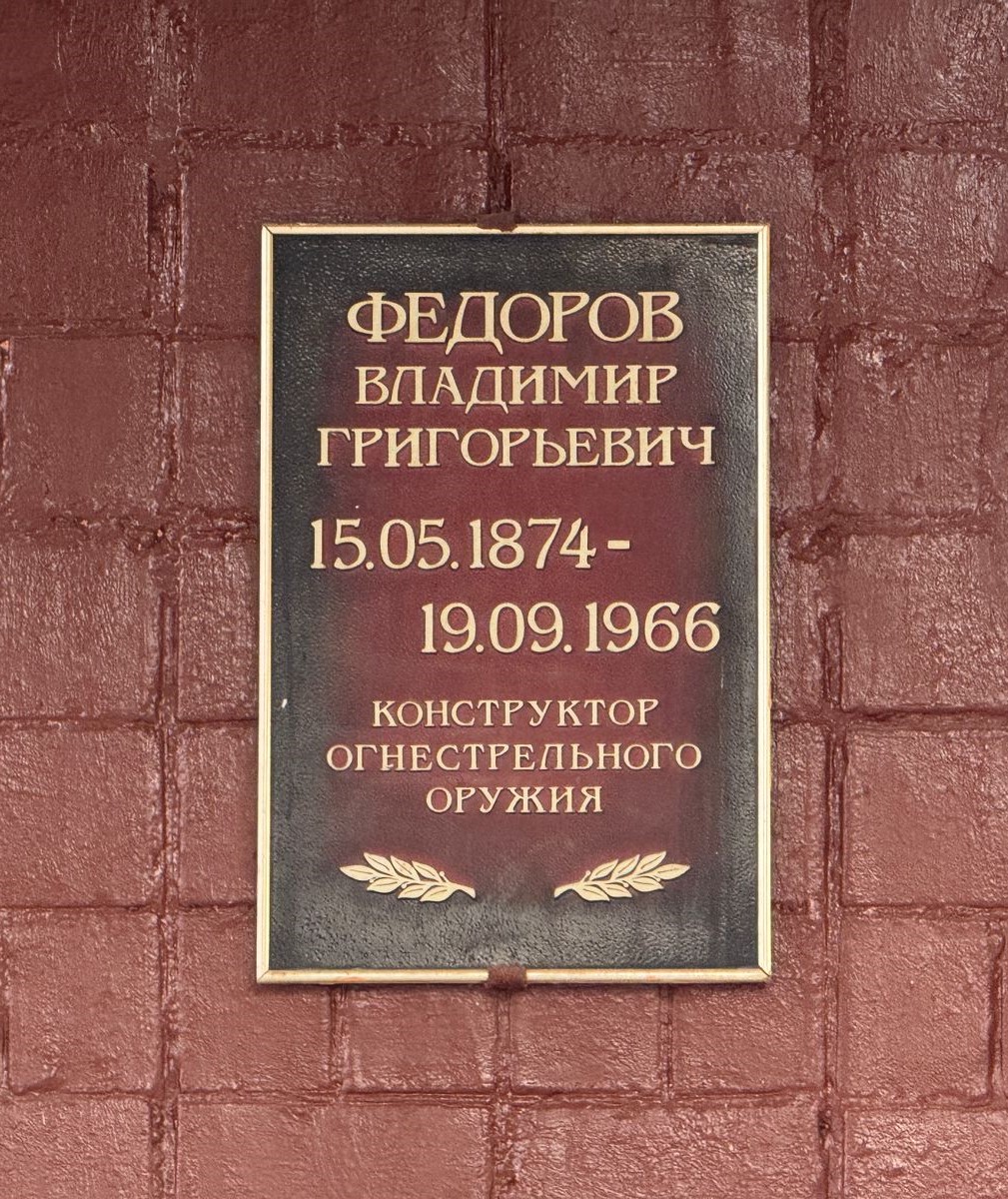
Vladimir Grigoryevich
Fedorov
1874-1966
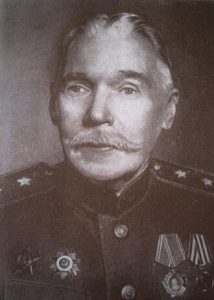
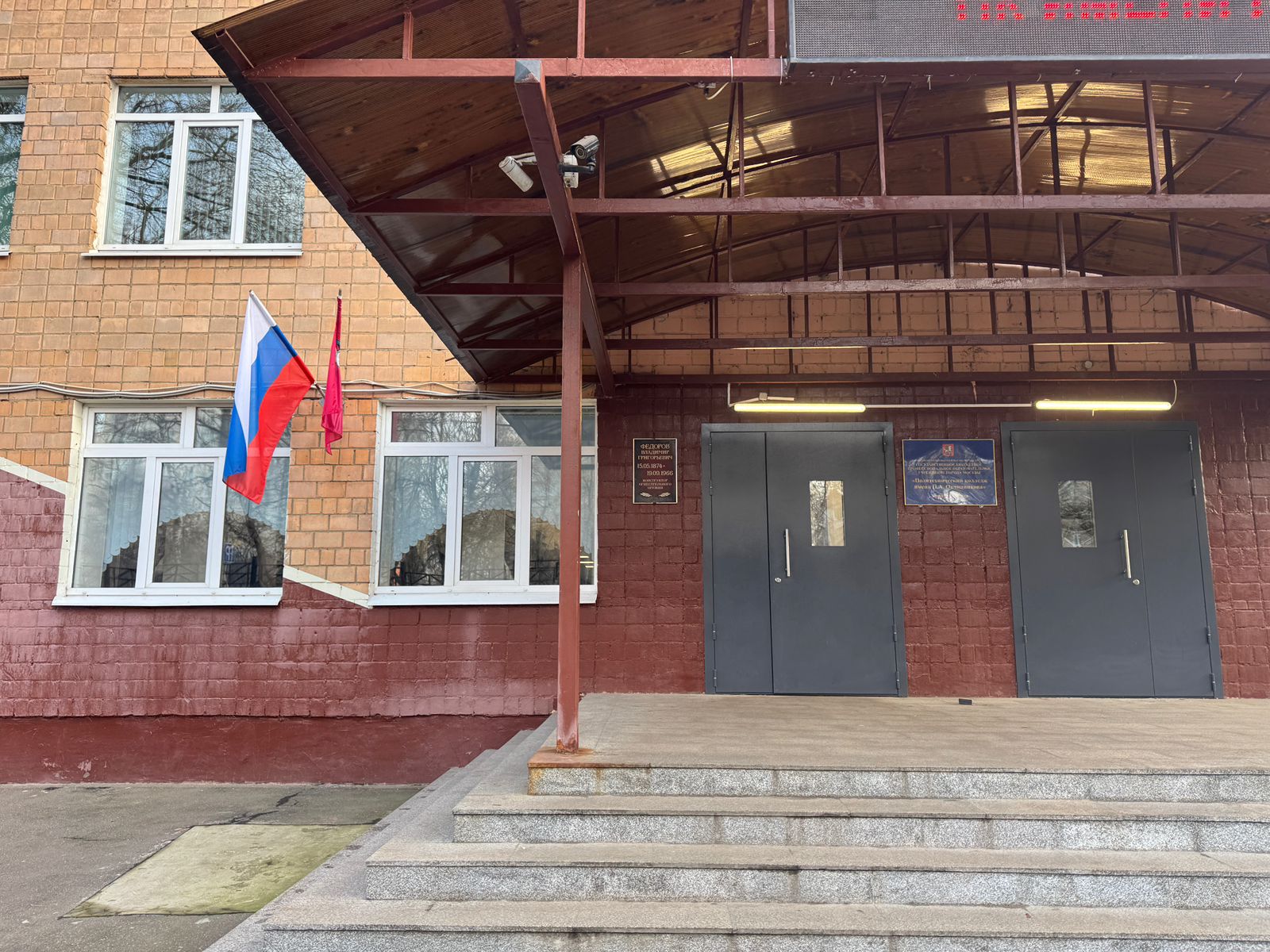
Vladimir Grigoryevich Fedorov was a Russian and Soviet small arms designer, a Lieutenant General of the Engineering and Technical Service (1943), an academician of the Academy of Artillery Sciences (1946), a Professor (1941), a Doctor of Technical Sciences (1940), and a Hero of Labor (1928). A graduate of the prestigious Mikhailovsky Artillery School and the Artillery Academy, Fedorov began his career as an artilleryman. However, a fateful meeting with the outstanding designer Sergei Ivanovich Mosin during his practical training at the Sestroretsk Arms Factory radically changed his life, awakening a genuine interest in small arms. Already at the beginning of the 20th century, Fedorov’s design genius began to manifest itself fully. In 1906, he presented to arms specialists the first Russian automatic rifle, developed on the basis of Mosin’s famous “three-line” rifle. His next innovative step was the development of an original 6.5 mm caliber cartridge (1913), which, in its concept, anticipated the emergence of the intermediate cartridge that would later become widespread and standard. Fedorov’s most significant achievement was undoubtedly the creation in 1916 of the world’s first assault rifle, which at the time was called an “automatic rifle” (literally “rifle-machine gun”), chambered for his own 6.5 mm cartridge. This weapon, equipped with a 25-round magazine, was a true breakthrough in arms manufacturing, though its widespread combat use was limited by the events of the revolution and the subsequent Civil War. Fedorov was not only a talented designer but also an outstanding organizer. In 1921, he founded the country’s first specialized design bureau for the development of small arms, thereby laying the foundation for the systematic work of entire teams on creating new models. Among his students and associates were such later celebrated Soviet gunsmiths as Degtyaryov, Shpagin, and Simonov. The contribution of Vladimir Grigoryevich Fedorov to the development of Russian arms manufacturing was duly appreciated. He was awarded the title of Hero of Labor, became a laureate of the prestigious Mikhailov Prize, a Doctor of Technical Sciences, and a Lieutenant General. During the Great Patriotic War, Fedorov actively served as a consultant, acting as a living link between generations of gunsmiths. His concept of light automatic infantry weapons, formulated at the beginning of the 20th century, had a decisive influence on the development of military thought worldwide. This is his main and undeniable legacy. As a sign of deep respect and recognition of Vladimir Grigoryevich Fedorov’s merits, a memorial plaque has been installed in Moscow, in the Yuzhnoye Tushino district, on the house at 33 Svobody Street, perpetuating his memory.
Address: Moscow, Svoboda str., 33