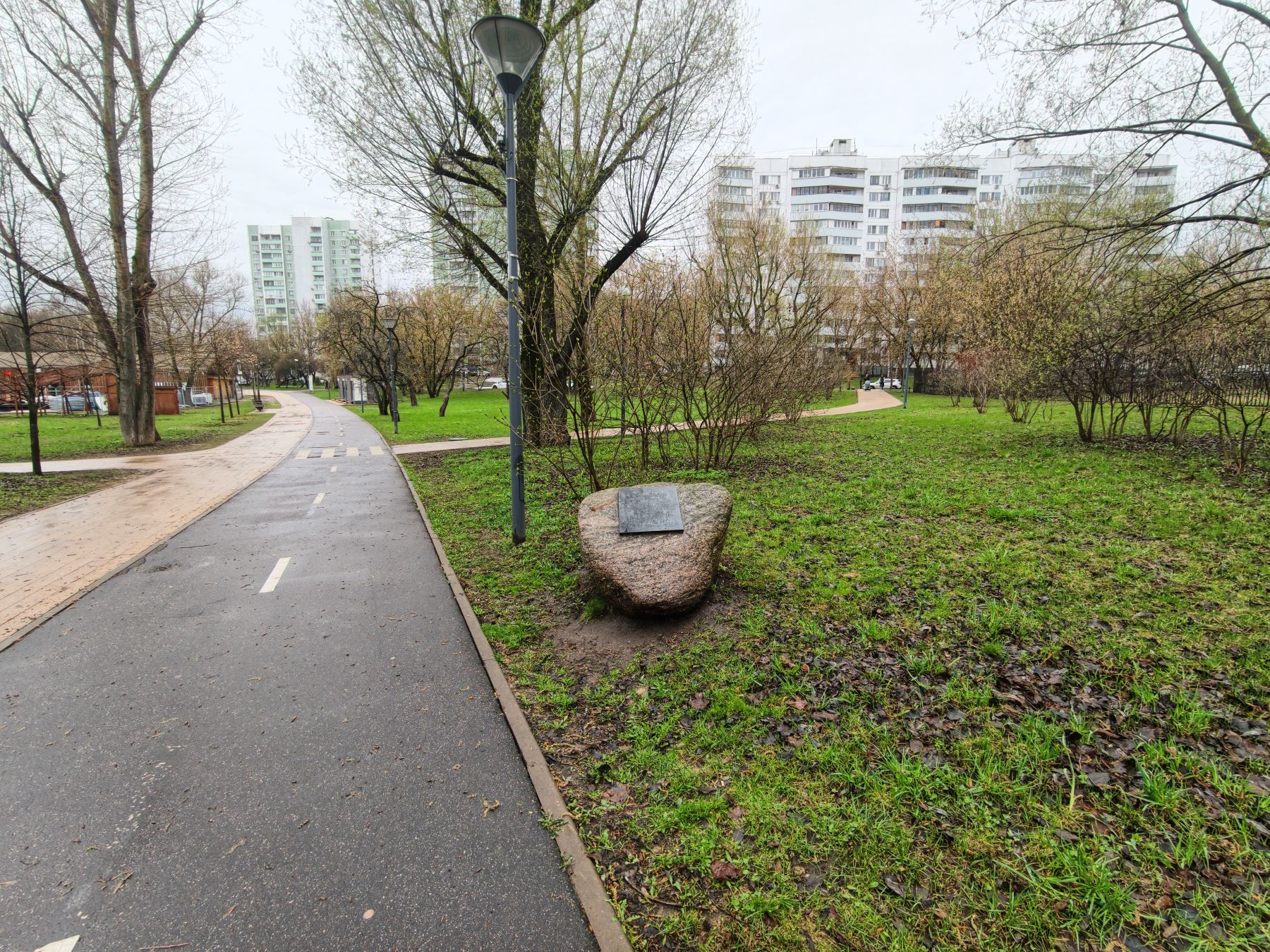
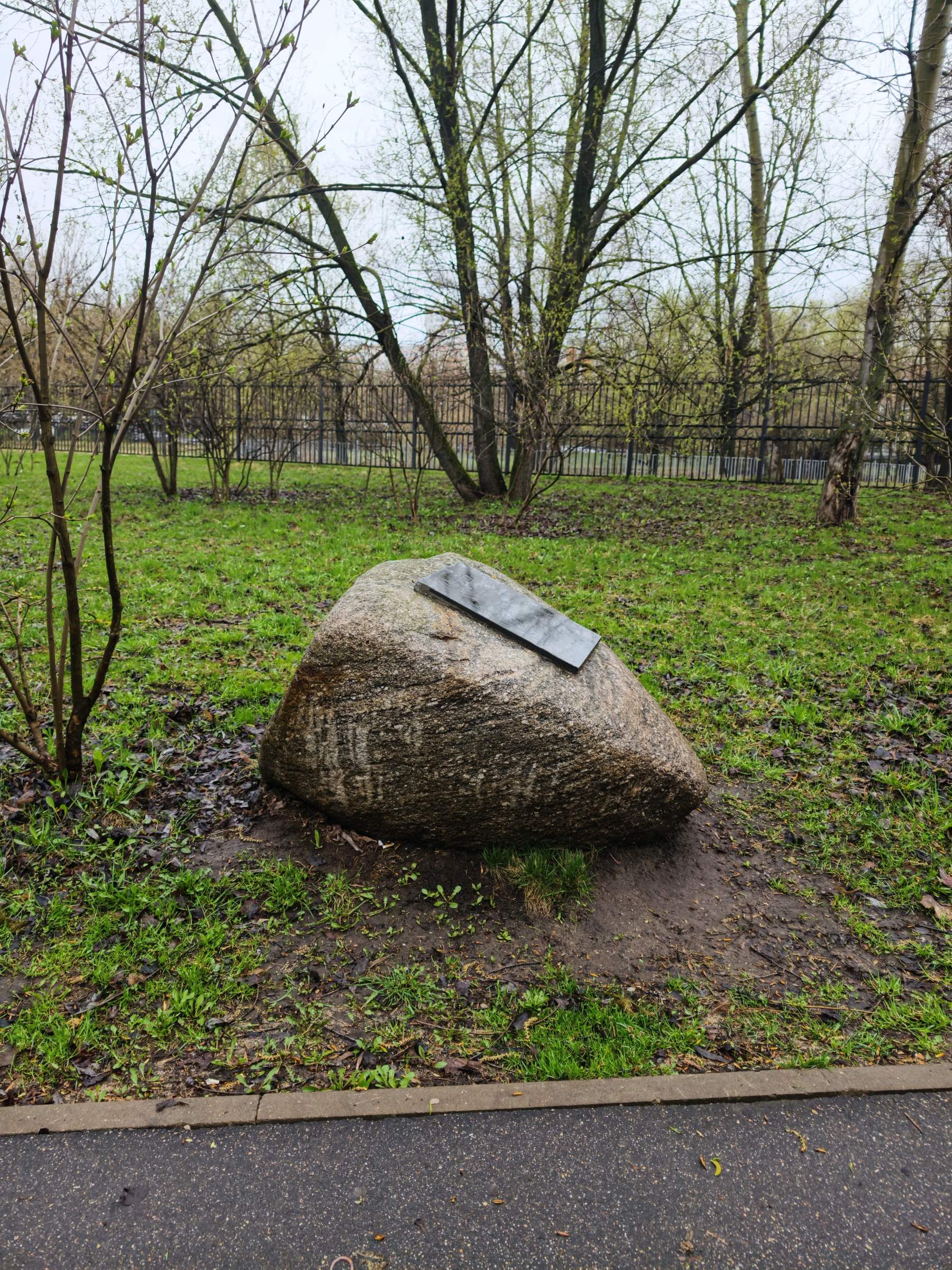
Memorial stone «Lilac Alley of Victory»
In the system of memorial sites in Moscow dedicated to the Great Patriotic War, a special place is occupied by commemorative markers integrated into the landscape environment. One such object is the memorial stone “Lilac of Victory Alley,” located in Yauza Park in the Yuzhnoye Medvedkovo district. Its official opening took place on May 9, 2015, and was timed to coincide with the 70th anniversary of Victory in the Great Patriotic War. The history of the alley’s creation began somewhat earlier than the official unveiling of the stone. On April 18, 2015, on the eve of the anniversary, the key part of the project was carried out-the planting of 70 lilac bushes. The number of bushes planted carries a strict symbolic meaning, directly corresponding to the 70th anniversary of the great Victory. This event is an example of the use of “living monuments” in the modern memorial practice of the capital. The botanical component of the alley has a special semantic depth. For its creation, not random varieties were used, but specially selected or bred varieties bearing the names of war heroes. Among the planted varieties, historical sources note lilac named after Marshal of the Soviet Union G.K. Zhukov, hero pilot Marina Raskova, and partisan Zoya Kosmodemyanskaya. These varieties were provided by the country’s leading botanical gardens. The choice of lilac as the main plant for the alley is not accidental and has a solid historical and cultural foundation. Lilac became an unofficial but widely recognized symbol of the 1945 Victory. This is because the flowering of this shrub in central Russia coincides in time with the May days of the war’s end. There are numerous accounts and memories of contemporaries confirming that blooming lilacs were given to soldiers and officers returning from the front. Thus, the laying of the alley in 2015 actualized this deep emotional connection between a natural phenomenon and historical memory. The memorial stone “Lilac of Victory Alley” represents a synthesis of a monumental form (the stone marker) and a dynamic living monument (a collection of varietal lilacs). The object is the result of joint actions by city authorities, botanical institutions, and the public. Its symbolism is multi-layered: it refers to a specific historical date (the 70th anniversary of Victory) and immortalizes the memory of specific heroes through named lilac varieties.
Address: Moscow, Pevchesky Pole Park