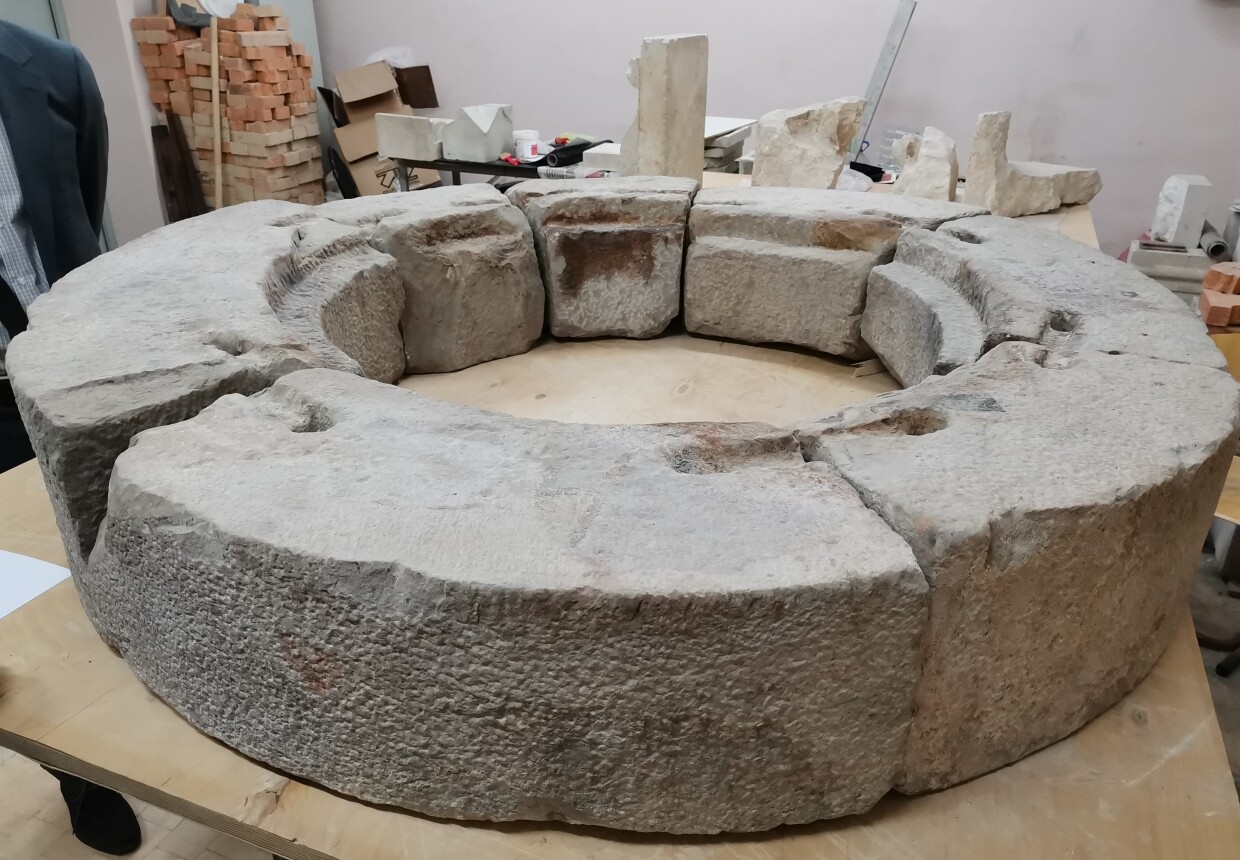
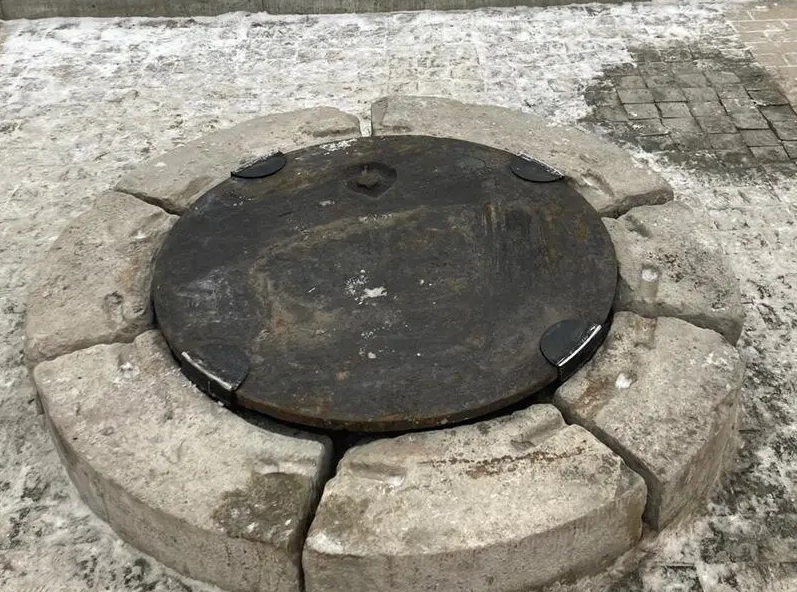
Monument to the engineering water supply system of Moscow in the 19th century. «The well of the Mytishchi aqueduct, 1828-1830»
The Well of the Mytishchi Water Pipeline is a 19th-century structure that was originally part of the Mytishchi water pipeline, a grand system that supplied the capital with fresh water. It has now been restored and put on display as an exhibit in an open-air museum. The ancient well is now exhibited next to the Rostokino Aqueduct. After restoration, it was turned into a museum piece – a unique artifact of 19th-century urban infrastructure. Experts date it to around 1830. The diameter of the cast-iron cover reaches 102 cm, and the stone ring, made of seven blocks, is about 143 cm in diameter. Previously, it served as an element of the Mytishchi water pipeline, the construction of which began in 1779. For many years, it remained the main source of clean drinking water for Moscow’s residents, until the Rublyovskaya water pumping station, using water from the Moscow River, was launched in 1903. The well was one of the engineering components of the Mytishchi water pipeline’s second phase. It is valuable as an archaeological monument and as evidence of the scientific and technological achievements of its era. The Mytishchi water pipeline is an ancient system, fragments of which have survived to this day within Moscow’s territory. Restorers carefully refurbished the well, and now everyone can see it in the park near the Rostokino Aqueduct. For its time, the well was innovative: it was prefabricated, standardized, made of ordinary brick, but with hand-finished details. For instance, the top section (the crowning part) is made of white stone blocks, hand-hewn and perfectly fitted, with a massive cast-iron cover. This cover represents the peak of Russian metallurgy during the reign of Nicholas I. Interestingly, the well was unearthed during archaeological supervision of work carried out under the “My Street” program in 2017. It was found near house number 28 on Sretenka Street. The challenge then became to preserve the artifact and make it accessible to the public. The decision was made to restore it and place it as a museumified exhibit in the open air. The work was carried out by teachers and students from the Restoration Department of the College of Architecture, Design, and Re-engineering № 26 (“26 KADR”), under the guidance of the State Research Institute of Restoration. The Prefecture of the North-Eastern Administrative District proposed placing it next to the Rostokino Aqueduct. Now, the well is a new city landmark and a stop on tours dedicated to the history of Moscow’s water supply.
Address: Moscow, Rostokinsky Aqueduct Park