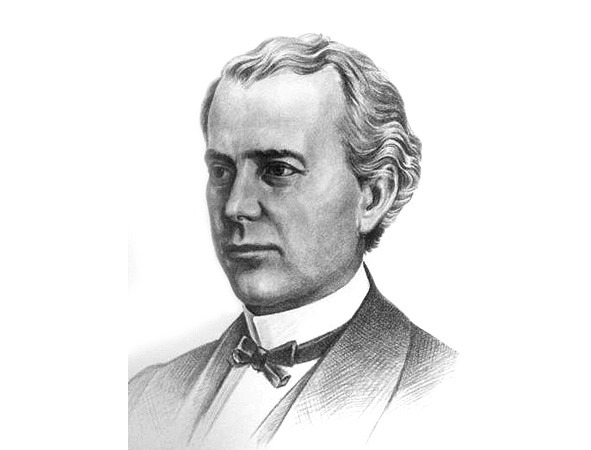
Nikolai Ivanovich
Zheleznov
1816-1877
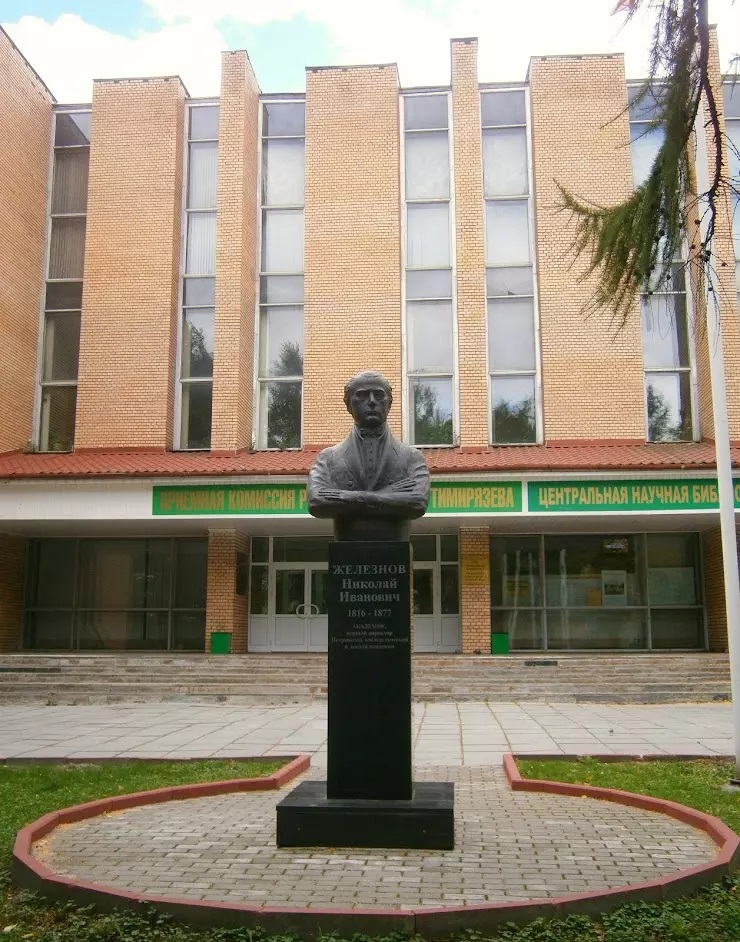
Next to the Central Scientific Library of the Timiryazev Academy stands a monument to the first director of the Petrovsky Agricultural and Forestry Academy – Academician Nikolai Ivanovich Zheleznov.
N.I. Zheleznov was born in 1816 into a noble family. In 1834, after graduating from the mining school, the young man became a student in the Faculty of Physics and Mathematics at St. Petersburg University. There he developed a passion for the natural sciences, especially botany. In 1840 he received his master’s degree, and in 1842 – his doctorate, for research in the embryology of higher plants. In 1842, the scientist was sent abroad to prepare him to head a department of agriculture. Returning in November 1845, he took up the post of adjunct professor in the Department of Agriculture at St. Petersburg University. In the autumn of 1847, he was transferred to Moscow University as an extraordinary professor in the Department of Agriculture and Forestry. From that time on, he concentrated on agronomy, while never forgetting his beloved botany. In 1853, the scientist left Moscow University to become an adjunct of the Imperial St. Petersburg Academy of Sciences in the Division of Plant Physiology, and in 1857 he received the title of extraordinary academician. During these years, Zheleznov conducted numerous experiments on cultivating plants on reclaimed lands, and his public reports aroused wide interest in scientific circles. In 1861, Nikolai Ivanovich was elected the first director of the higher agronomic educational institution being organized in Petrovsko-Razumovskoye – the Petrovsky Agricultural and Forestry Academy, which opened on December 3, 1865. On the initiative of its first director, a scientific library was established at the Academy, and since 1967 it has borne the scientist’s name. On December 12, 2006, a monument to Nikolai Ivanovich Zheleznov was solemnly unveiled on Larch Alley, beside the building of the Central Scientific Library.
Address: Moscow, Larch al., 2, building 1