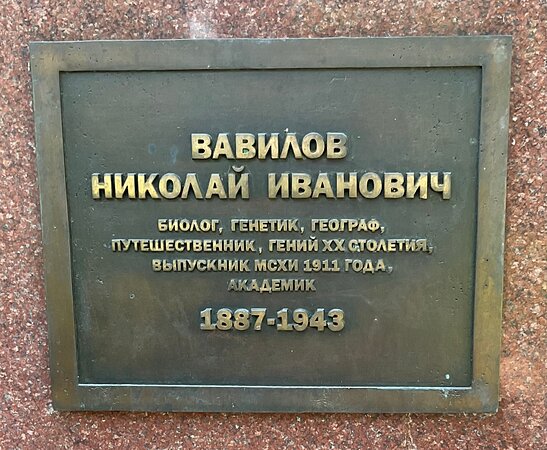
Nikolai Ivanovich
Vavilov
1887-1943
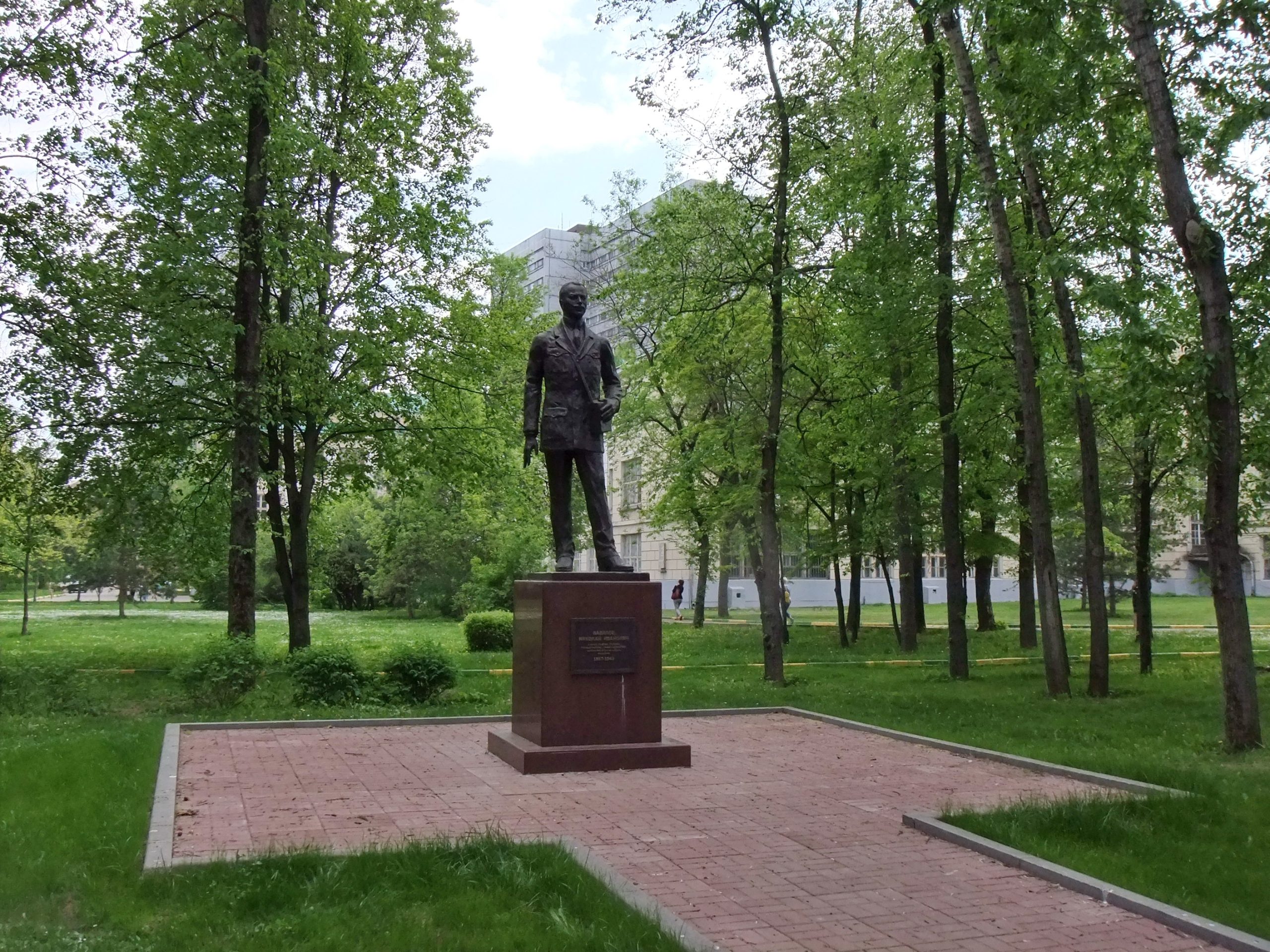
On the grounds of the Russian State Agrarian University – Moscow Timiryazev Agricultural Academy named after K.A. Timiryazev, among ancient avenues and modern academic buildings, a monument appeared in 2015 that immediately became one of the campus’s significant points of attraction. It is the monument to Nikolai Ivanovich Vavilov – a brilliant scientist whose name is inscribed in golden letters in the history of world biology.
Nikolai Ivanovich Vavilov (1887-1943) is a figure of truly planetary scale. He was not merely a scientist, but the founder of the theory of the centers of origin of cultivated plants and the author of the law of homologous series in hereditary variation. Under his leadership, a unique seed collection – the largest in the world – was created and became a national treasure. The scientist’s fate is tragic: he perished during the years of Stalinist repressions, yet his scientific legacy was not only preserved but went on to form the foundation of modern genetics and plant breeding. The sculpture, depicting the outstanding biologist and plant breeder at full height, was solemnly unveiled in the year of the 150th anniversary of the Timiryazev Academy. The choice of date is deeply symbolic: it was here, within the walls of the legendary “Petrovka,” that Nikolai Ivanovich began his journey into science, graduating from the academy in 1911. A century later, a memorial study-museum dedicated to his life and work had already been established at the university, and the unveiling of the monument became a logical continuation of the effort to immortalize the memory of the great alumnus. The monument was created by People’s Artist of Russia Lev Matyushin. He succeeded in capturing in bronze not only a portrait likeness, but also the inner composure, energy, and magnitude of the scientist’s personality. Vavilov is presented in his characteristic image of a researcher striding forward, which resonates with his life credo: to tirelessly study, collect, and safeguard the world’s plant riches. The idea of erecting the monument was born in the hearts of those directly connected to the alma mater. The initiative came from the academy’s graduates, who spent several years raising funds for the project. This fact underscores the enduring connection between generations and the profound respect for Vavilov’s legacy. Today, the monument to N.I. Vavilov plays an important role in the cultural and scientific life of the capital. It has become not only an adornment of the architectural and park ensemble of the Timiryazev Academy, but also a point of attraction for students, schoolchildren, and tourists. Each year, scientific conferences dedicated to the scientist’s legacy, guided tours, and commemorative events are held at the foot of the monument. For young researchers, this monument is a reminder of the heights of scientific endeavor, of loyalty to one’s chosen vocation, and of the courage required in the service of truth.
Address: Moscow, Listvennichnaya al.