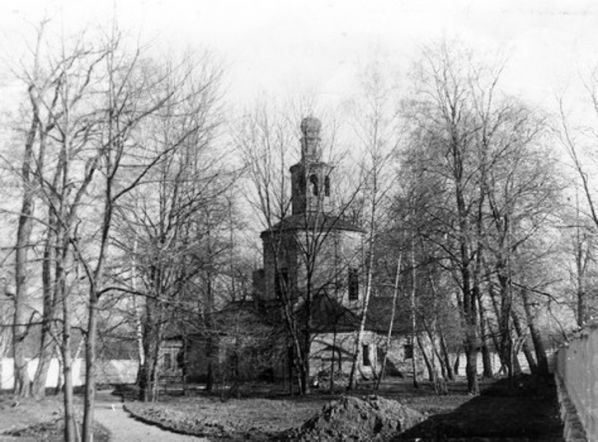
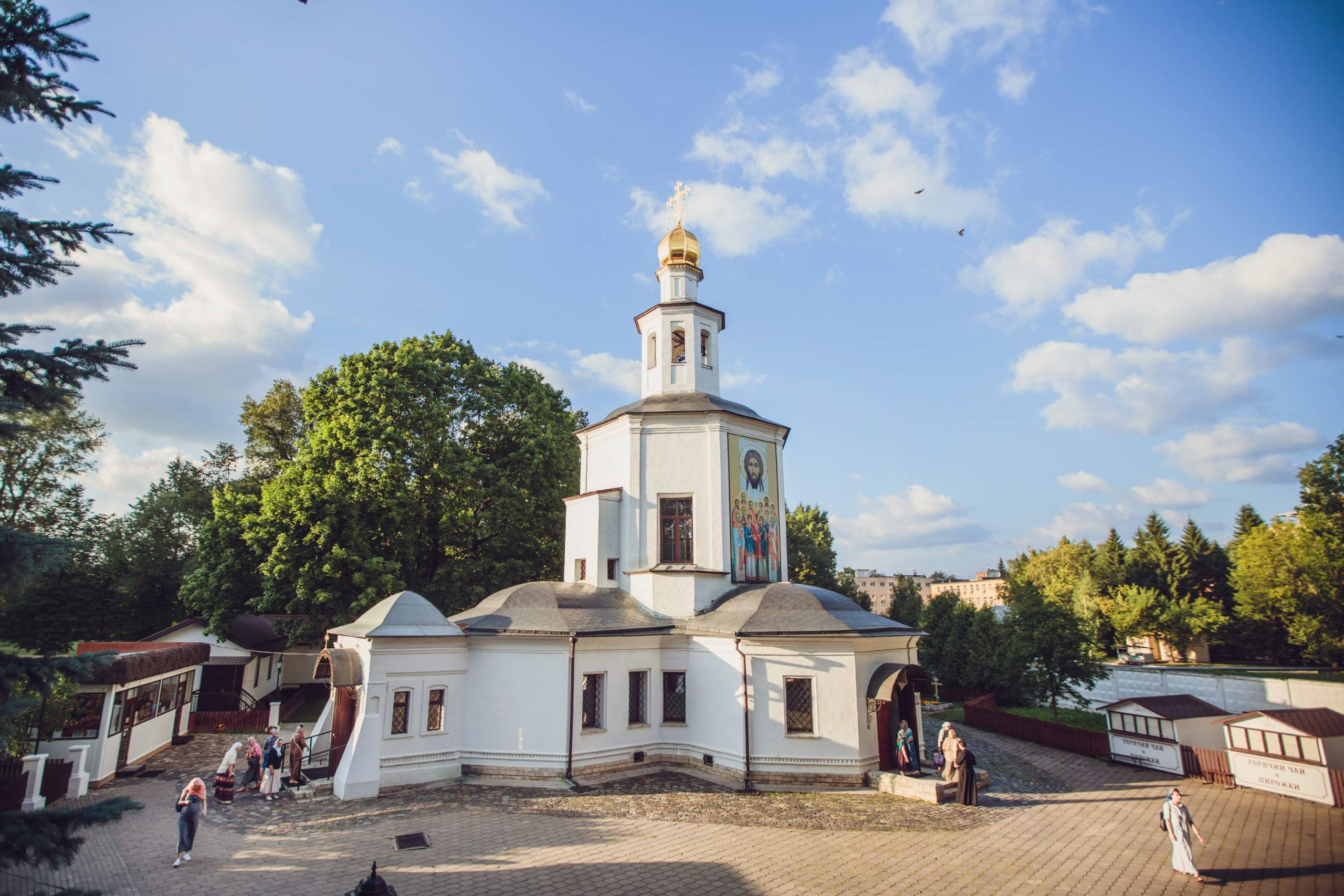
Church of the Image of the
Saviour Not Made by Hands in Perovo
According to ancient Church Tradition, icons of the “Savior Not Made by Hands” type are the very first and, most importantly, the non-man-made image of Jesus Christ, which miraculously appeared during His earthly life. The history of this image goes back to King Abgar of Edessa, who suffered from incurable leprosy. Having heard of the miracles of Jesus of Nazareth, he sent his archivist (or painter) Ananias to Him with a letter begging for healing. Unable to approach Christ because of the crowd and failing in his attempts to paint His portrait, Ananias was summoned by the Savior Himself. The Lord washed His face, wiped it with a cloth (ubrus), and His divine countenance was miraculously imprinted upon the fabric. This Image Not Made by Hands was delivered to Abgar, and the king, venerating it with faith, received complete healing, after which he converted his city of Edessa to Christianity. The holy relic was placed in a niche above the city gate, but centuries later, under a descendant who was an idol worshiper, a bishop walled up the niche with a clay tile (or ceramic “keramidion”) to protect it. The location of the image was forgotten until the year 544, when the army of the Persian king Khosrow I laid siege to Edessa. The Mother of God appeared in a vision to Bishop Eulalius, revealing the hiding place. When the niche was opened, a double miracle was discovered: the incorrupt Image Not Made by Hands on the cloth and its exact impression on the very clay tile that had covered it. After prayers before the shrine and a procession along the city walls, the enemy army retreated. This event established two primary iconographic types: “Savior on the Ubrus” (the face on a cloth with an ornamental border) and “Savior on the Keramidion” (the face as if imprinted on a clay or stone surface). This image holds enduring theological significance as a testimony to the truth of the Incarnation-that Christ possessed a real human face, which can be depicted. It became the prototype for all subsequent icons of the Savior. Special veneration in Russia is linked to numerous miraculous copies. Among them, the Glinsk image from Glinsk Hermitage, famous in the 19th century, is widely known. In Saint Petersburg, the Transfiguration Cathedral houses an icon painted for Tsar Alexei Mikhailovich by the famous iconographer Simon Ushakov; this image was a beloved holy treasure of Peter the Great, accompanying him during the founding of the city and at the Battle of Poltava. Reports of the miraculous renewal of darkened icons of the Savior Not Made by Hands, for example in the St. Boris and Gleb Monastery, are seen by the faithful as a sign of special grace and the living presence of God.
Address: Moscow, Svobodny ave., 4A