Monument to
Patriarch Job
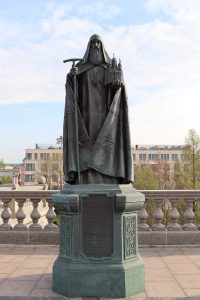
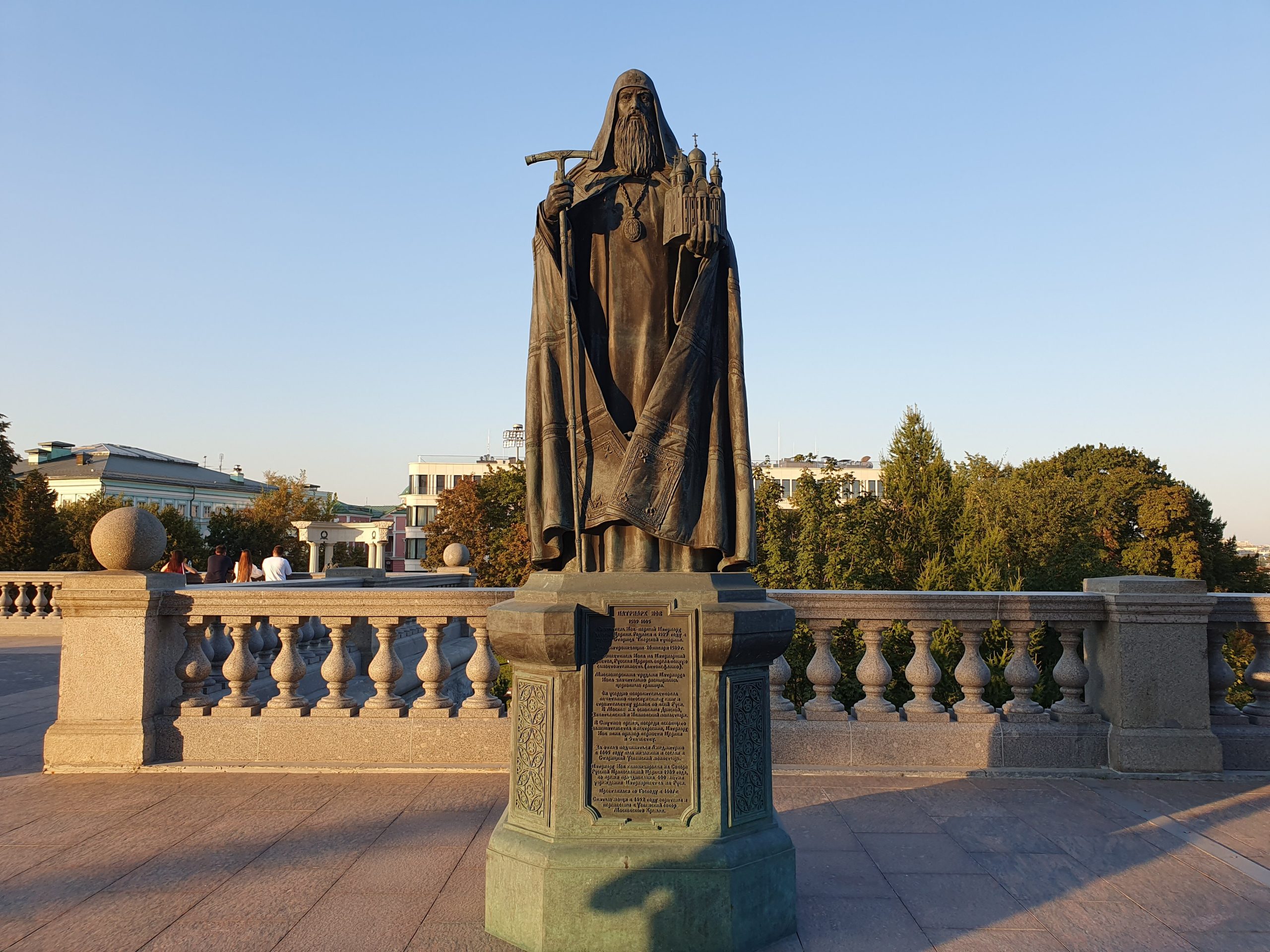
On the eastern side of the Cathedral of Christ the Savior, where the white stone walls meet the life of the modern city, stands a figure that bridges eras. The bronze monument to the first Moscow Patriarch, Job, is not merely a memorial to historical memory. It is a silent witness to the birth of the Russian patriarchate, a spiritual beacon in the capital’s landscape, and a reminder that the unity of Church and state was forged in times of the greatest trials. The year 1589 marked a turning point in the history of the Russian Church. With the establishment of the Moscow Patriarchate, Metropolitan Job was elevated as the first Patriarch of Moscow and All Russia-a step that affirmed Russia’s spiritual independence on the world stage. His election signified not only ecclesiastical but also political strengthening of the state on the eve of severe ordeals. Fate placed upon Patriarch Job (1555-1607) the burden of ministry during the years known to history as the Time of Troubles. In an era of dynastic crisis, foreign intervention, and internal upheaval, he became a bastion of stability, striving to preserve the unity of the people and the authority of the Orthodox faith. His endeavors ranged from liturgical revival to participation in state affairs-not as interference in secular power, but as pastoral care for the nation in a moment of historical rupture. In 2015, memory of the founder took shape at the walls of Russia’s main cathedral. Sculptor Andrei Kovalchuk created a monument in which the rigor of canon merges with the depth of psychological portraiture. The figure of Patriarch Job, cast in bronze, is seated in traditional vestments-the epitrachelion upon his shoulders and the high miter upon his head. His posture conveys not power, but service; his gaze, directed into the distance, bears the imprint of anxiety for the fate of the Fatherland and the steadfastness of faith. The tall granite pedestal is adorned with bas-reliefs depicting key moments of the Patriarch’s ministry: the coronation of Tsar Boris Godunov, prayers during years of famine, and efforts to strengthen the ecclesiastical order. The architectural solution is harmoniously integrated into the cathedral ensemble: the monument does not intrude upon the space but complements it, becoming a natural extension of the spiritual landscape. The placement of the monument is no coincidence. The Cathedral of Christ the Savior, resurrected from oblivion at the end of the 20th century, is itself a symbol of overcoming the atheist era. At its walls stands a monument to the first patriarch, whose ministry initiated the patriarchal tradition. Two acts of revival, separated by four centuries, converge within a single space of memory. Patriarch Job reigned only briefly-just eight years as patriarch. Yet it was he who laid the foundation upon which the Russian Church stood in subsequent centuries. His bronze image at the walls of the Cathedral of Christ the Savior is not a tribute to the past. It is a living dialogue with the present: a reminder that even in an age of strife and division, it is possible to preserve faithfulness, unity, and hope.
Address: Moscow