Monument to
Patriarch Hermogenes
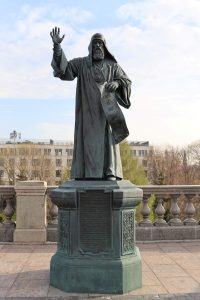
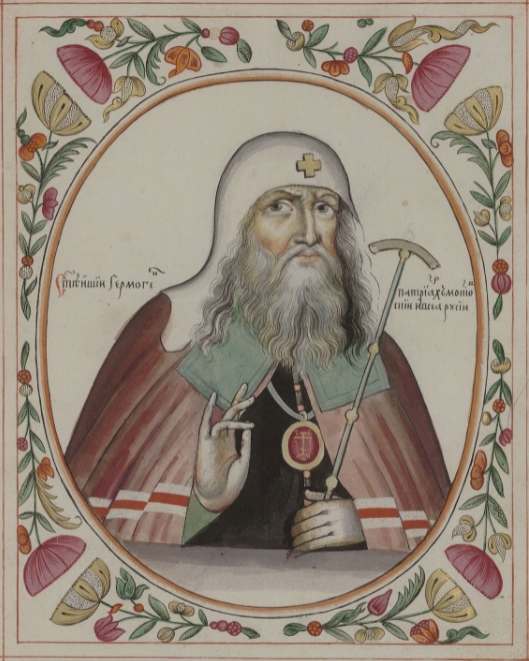
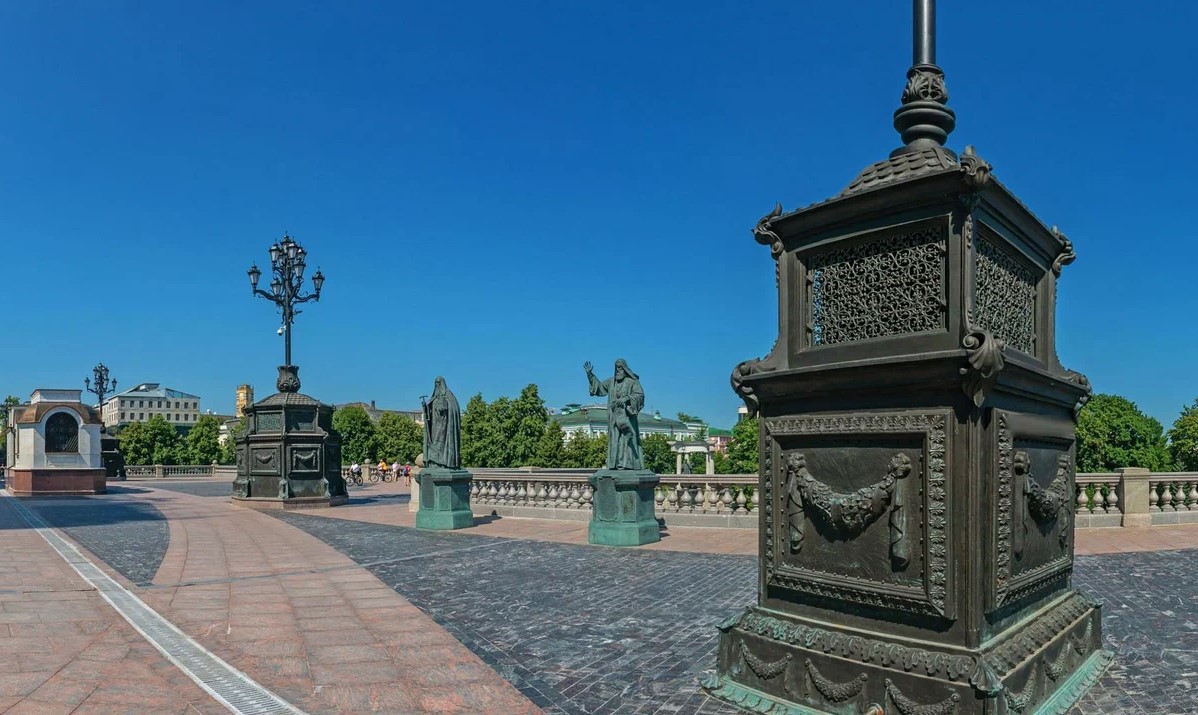
At the walls of the Cathedral of Christ the Saviour in Moscow stands a bronze monument to Patriarch Hermogenes, one of the key figures of the Time of Troubles. Created by Zurab Tsereteli, the memorial immortalizes the feat of the Primate of the Russian Church, whose voice proved decisive in the struggle for Russia’s independence. Patriarch Hermogenes, born George around 1530, completed his earthly journey in 1612. In 1606, he ascended the patriarchal throne and from that moment assumed a central role in the spiritual resistance to the Time of Troubles-that dramatic era when the country plunged into chaos amid political and social upheaval caused by internecine strife, foreign invasion, and a succession of impostors vying for the royal crown. The Troubles, which engulfed Rus’ at the close of the 16th century, brought the state to the brink of profound crisis. The Russian land was torn apart, feudal domains warred amongst themselves, and the heart of the country-Moscow, fell under the heel of Polish interventionists. In this tragic hour, Patriarch Hermogenes revealed himself as a true centre of resistance and a champion of the Fatherland’s independence. The high priest’s immeasurable contribution was his fervent appeal to his compatriots, in which he called upon them not to bow before the invaders, but to fight for the freedom of their native land. In 1611, languishing in Polish captivity and deprived of any means to act openly, Hermogenes secretly dispatched his famous epistle. In this message, like the voice of God itself, he implored the Russian people to set aside their discord, unite as one heart, and rise against the foreign oppressors. This appeal became the moral tuning fork that attuned the nation to holy war and provided the powerful impetus for the formation of the people’s volunteer army. It was this militia, inspired by the patriarch’s words, that a year later, in 1612, liberated the Primatial See. The role of Saint Hermogenes in delivering the country from the foreign yoke is truly colossal, and his name is inscribed forever on the tablets of Russian glory. The sculpture is rendered in a monumental style: the patriarch is depicted in full vestments, holding his crozier, his face expressing unyielding resolve. The bronze figure is set upon a granite pedestal adorned with reliefs illustrating episodes from his life. The composition harmoniously integrates with the cathedral ensemble, enhancing its significance as a place where faith, history, and national memory converge. This monument is more than a mere tribute to the past. It serves as a reminder: in times of trial, spiritual authority can unite a people and alter the course of history. Hermogenes embodies that indissoluble bond between Church and society, which has so often proven to be Russia’s mainstay in eras of upheaval.
Address: Moscow