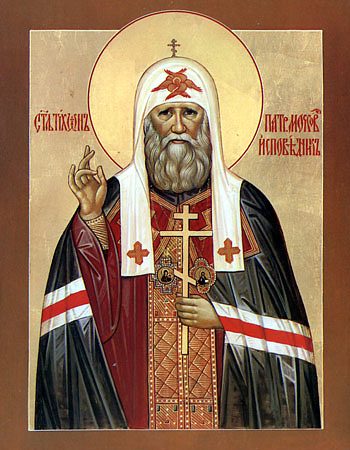
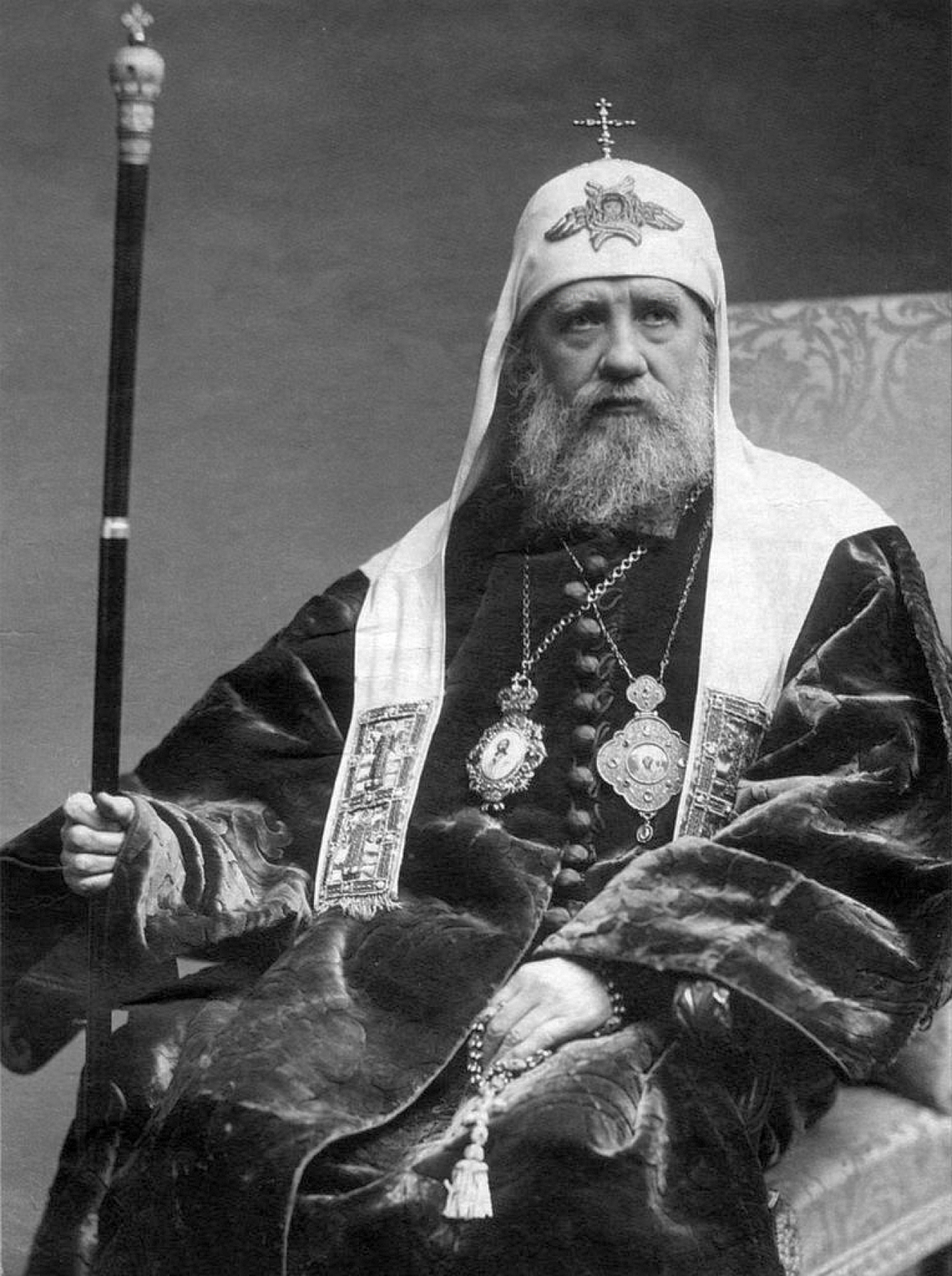
Monument to Patriarch Tikhon
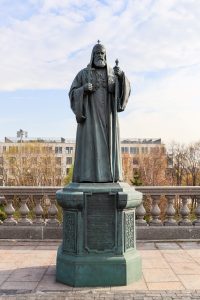
On the southern side of the Cathedral of Christ the Saviour’s stylobate, facing the Moskva River, stands a bronze monument to the eleventh Patriarch of Moscow and All Russia-Saint Tikhon. Unveiled in November 2017 during the Bishops’ Council, the monument became part of the sculptural ensemble “The Patriarchs of Moscow and All Russia,” intended to immortalize the memory of the primates who shaped the destiny of the Russian Church. Vasily Ivanovich Bellavin, the future Patriarch Tikhon, was born in 1865 into the family of a priest in the village of Klin, Toropets District, Pskov Province. Having taken monastic vows in 1891, he rose from Bishop of the Aleutians and Alaska to Metropolitan of Moscow. His election to the patriarchal throne in November 1917 was a historic event: after nearly two centuries of the Synodal period, the Russian Church once again had its own Primate-and precisely at a moment of profound crisis. The years of Tikhon’s patriarchate (1917-1925) coincided with the revolution, the Civil War, and the onset of relentless persecution against the Church. In 1918, the decree on the separation of church and state initiated the systematic oppression of believers. The Patriarch was repeatedly arrested, held under house arrest, and his appeals for the defense of churches and shrines provoked harsh reactions from the new authorities. Yet he remained faithful to the Church, refusing to legitimize the schismatic “Renovationist” movements supported by the OGPU. The monument, created by sculptor Elena Bezborodova and cast at the “Lit Art” foundry, depicts the primate in episcopal vestments. The bronze sculpture conveys the inner composure and spiritual fortitude of a patriarch who endured years of humiliation but was never broken by them. The placement of the monument at the walls of the country’s main cathedral is symbolic: it was here, at the Cathedral of Christ the Saviour, that the restoration of the patriarchate was proclaimed in November 1917, and the name of the elected candidate-Metropolitan Tikhon-was announced. Upon his death on April 7, 1925, in Moscow, Patriarch Tikhon left behind a testament urging the faithful towards peace and unity. In 1989, the Russian Orthodox Church canonized him as a confessor, and in 1992, the Holy Synod glorified him as a saint. The monument at the Cathedral of Christ the Saviour is more than a tribute to historical memory. It serves as a reminder of how, in an era of total violence and ideological pressure, spiritual authority can become a pillar of support for millions. Tikhon did not seek political struggle, yet by defending the Church’s right to exist, he became a symbol of an unconquered conscience. His figure at the walls of the rebuilt cathedral stands as a silent testimony: even in the darkest times, faith can preserve a nation from spiritual disintegration.
Address: Moscow