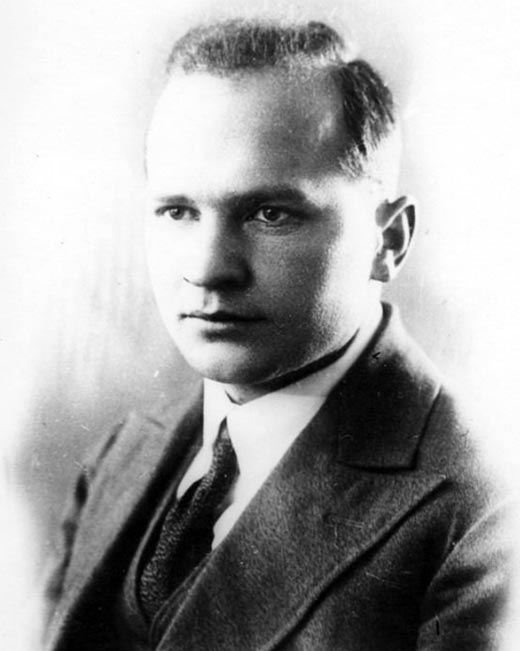
Nikolai Leonidovich
Dukhov
1904-1964
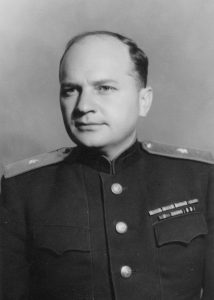
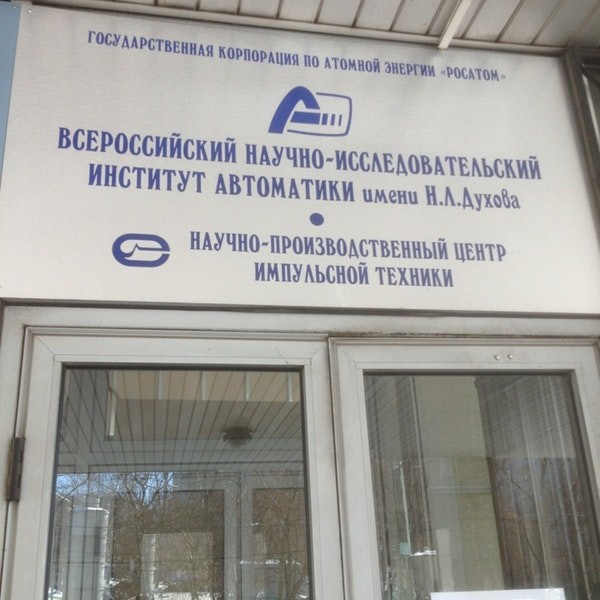
Nikolai Leonidovich Dukhov was a Soviet designer of armored vehicles and nuclear and thermonuclear weapons, a Corresponding Member of the USSR Academy of Sciences, Doctor of Technical Sciences, three‑time Hero of Socialist Labour, Lieutenant‑General of the Engineering‑Technical Service, and a recipient of the Lenin Prize and five Stalin Prizes. In the history of Soviet defence engineering, Dukhov occupies a special place: his work spanned two decisive arenas of the Cold War- tanks and nuclear weapons. He helped create the shield for tank armies and forged the sword of strategic deterrence. A graduate of the Leningrad Polytechnic Institute and a gifted design engineer, Dukhov began his career at the Kirov Plant in Leningrad. His mathematical mind and engineering intuition quickly drew attention. In the prewar years he made a decisive contribution to the design of the transmission for the legendary KV (Kliment Voroshilov) tank, solving complex problems that had stymied other teams. That work marked his entry into top‑level engineering design. The Great Patriotic War (World War II) was a period of rapid advancement for Dukhov. Evacuated with the plant to the Urals – to Chelyabinsk, the famed “Tankograd”- he soon headed the design bureau, replacing the arrested Joseph Kotin. Under his leadership, armoured vehicles that shaped the course of battles were produced. He was one of the principal designers of the IS (Iosif Stalin) heavy tank, developed in response to German Tigers and Panthers. The IS‑2, with its powerful 122 mm gun, became one of the symbols of the assault on Berlin. After the war he supervised development of the postwar IS‑4 heavy tank. For these achievements he received multiple Stalin Prizes and was named a Hero of Socialist Labour. In 1948 Dukhov’s career took a dramatic turn. On the personal instructions of L. P. Beria and at I.V. Kurchatov’s recommendation, the country’s leading tank designer was transferred to the top‑secret nuclear centre KB‑11 (Arzamas‑16, now Sarov). There his talents found a new application: designing the engineering “products”- the bombs themselves. His mathematical rigor and experience with complex mechanical systems proved invaluable. Under his leadership and with his direct involvement, the automation and mechanical systems for the first Soviet atomic bomb (RDS‑1) and the early thermonuclear device (RDS‑6s) were developed. He ensured that brilliant physical concepts were translated into reliable, precise, and safe engineering devices. In 1954 Dukhov became Chief Designer and later head of KB‑11, succeeding Yuli Khariton. For his role in creating the hydrogen bomb he was awarded a second Gold Star of Hero of Socialist Labour and the Lenin Prize. Dukhov died in 1964, leaving a distinctive dual legacy: his tanks became legends of the Great Victory, and the systems he helped create formed the foundation of the country’s nuclear deterrent. He exemplified the versatile engineer‑scientist of his era, entrusted with solving some of the most momentous defence challenges. The All‑Russian Research Institute of Automation (VNIIA), where he worked from 1954 to 1964, now bears his name.
Address: Moscow, Sushchevskaya St., 22