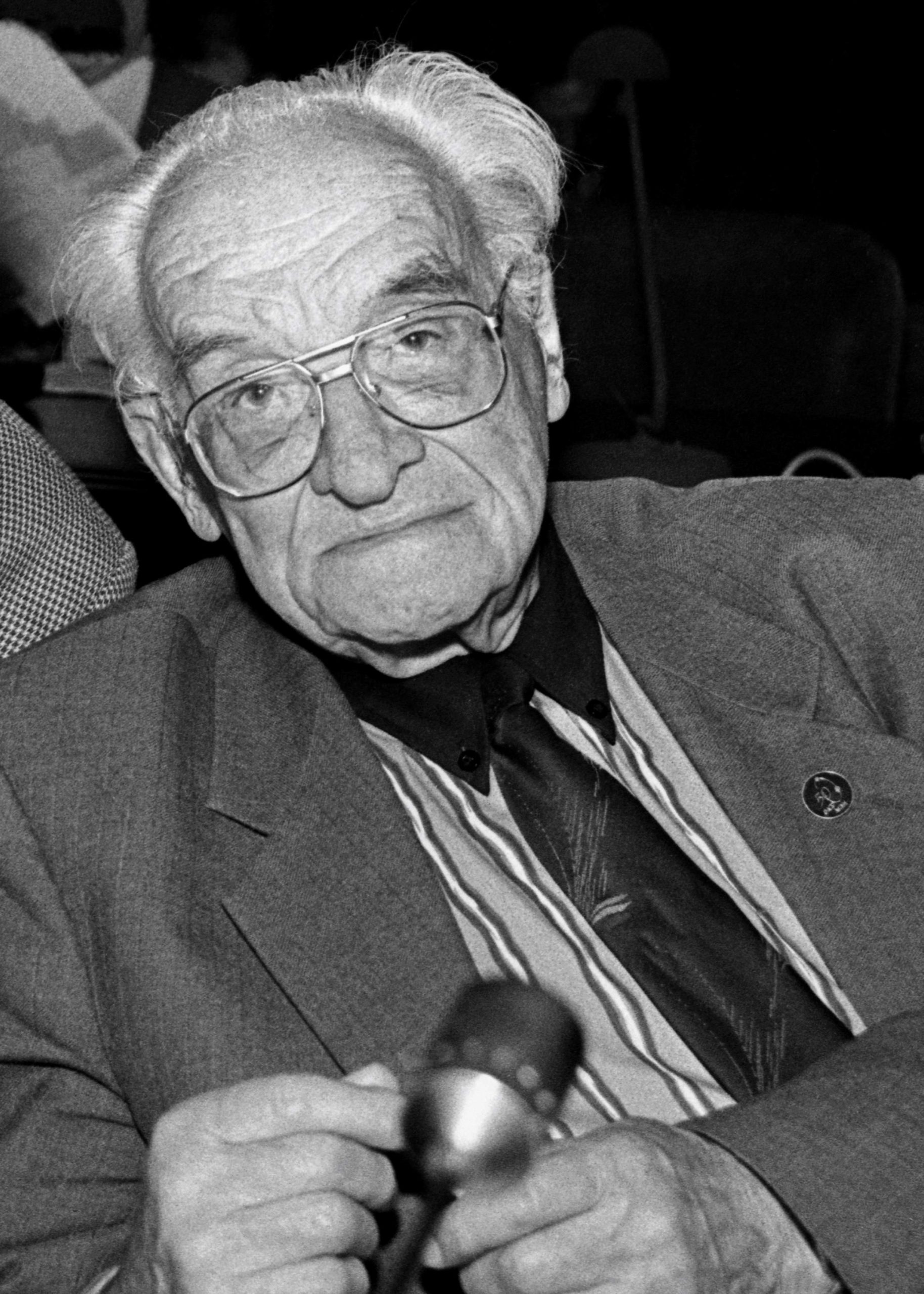
Vladimir Alexandrovich
Kotelnikov
1908-2005
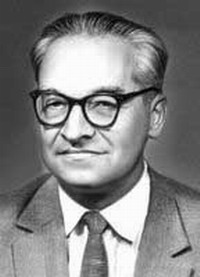
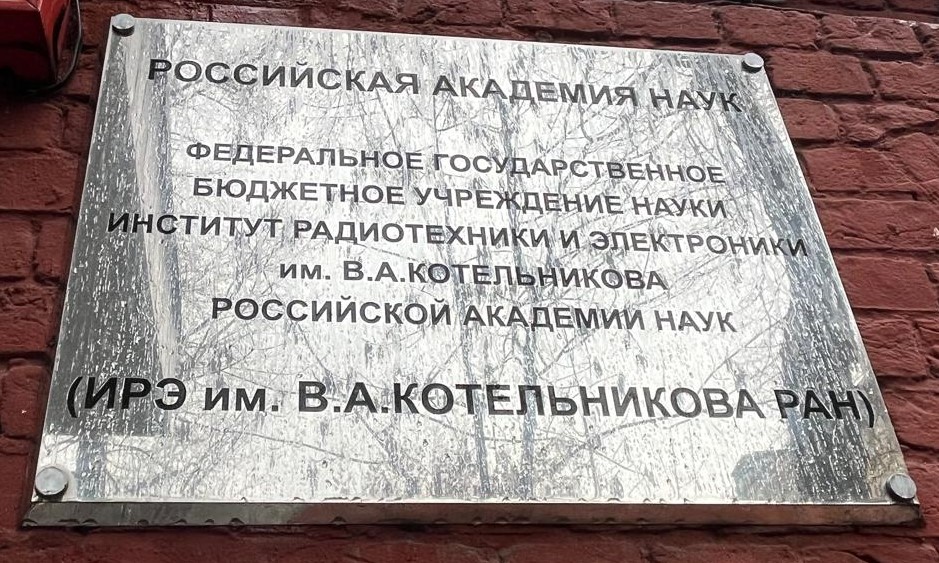
Vladimir Alexandrovich Kotelnikov was a leading Soviet and Russian scientist whose name is inseparably linked with the development of radio engineering, radio communications, and radio astronomy. He made foundational contributions to information theory and electronic cryptography, became an Academician of the USSR Academy of Sciences (later the Russian Academy of Sciences), and was twice named a Hero of Socialist Labour. His achievements – including the sampling theorem, principles for secure (undecipherable) equipment, and the theory of noise immunity – had a lasting impact on global science and technology. During the 1930s–1950s Kotelnikov’s research focused on new radio‑communication systems and improvements in radio reception. He studied interference in radio reception and developed effective methods to mitigate it. The sampling theorem he formulated in 1933 became a cornerstone of digital signal processing, showing how a band‑limited analog signal can be accurately represented by discrete samples. The principles for constructing undecipherable equipment that he developed in 1941 laid key foundations for modern electronic cryptography. Under Kotelnikov’s leadership, single‑sideband communication equipment was implemented on the Moscow-Khabarovsk line, and the first systems for controlling and monitoring spacecraft were developed. He also founded a new Soviet direction in radio astronomy – planetary radar. In the 1960s, his team conducted radar observations of Venus, Mars, and Mercury, determining important planetary characteristics such as Venus’s rotation period and direction, surface reflection coefficients, and other parameters. In the 1980s and 1990s Kotelnikov and his colleagues performed the fundamental research that enabled, for the first time worldwide, mapping of Venus’s northern hemisphere using the Venera‑15 and Venera‑16 probes. This work represented a major advance in the geology and geophysics of Venus, providing unique surface data. Kotelnikov’s contributions were recognized with numerous awards and honours, including the Lenin Prize, the USSR State Prize, the A.S. Popov Gold Medal, the M. V. Lomonosov Gold Medal, the M.V. Keldysh Gold Medal of the USSR Academy of Sciences, and the Alexander Graham Bell Medal. He was a founder and honorary member of the A.S. Popov All‑Russian Scientific and Technical Society of Radio Engineering, Electronics, and Communications, and an honorary member of the Institute of Electrical and Electronics Engineers (IEEE). His name is commemorated by the V.A. Kotelnikov Institute of Radio Engineering and Electronics of the Russian Academy of Sciences in Moscow.
Address: Moscow, Mokhovaya St., 11, building 7