Avraamy Pavlovich
Zavenyagin
1901-1956
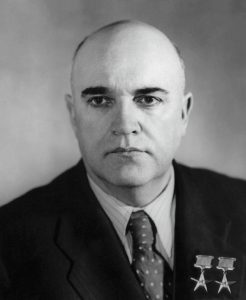
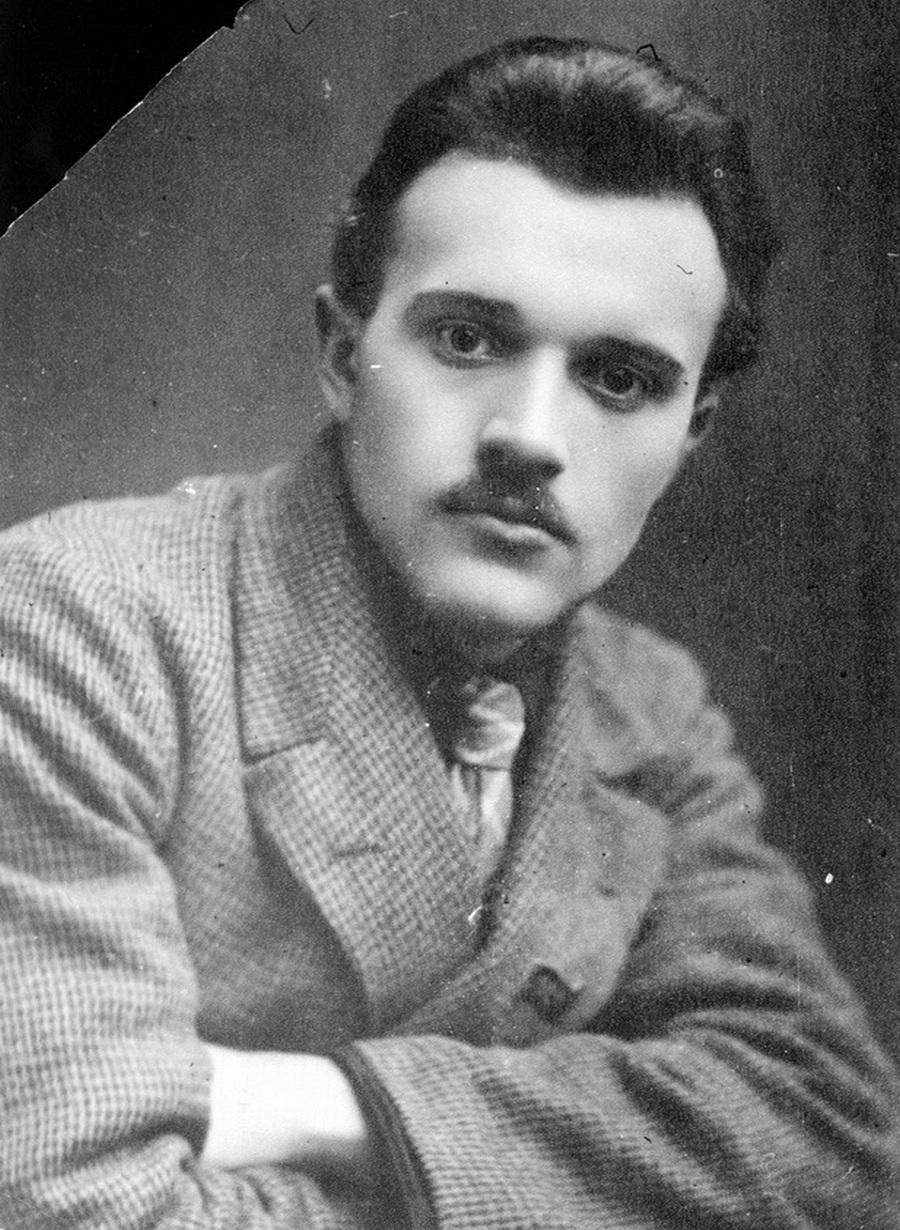
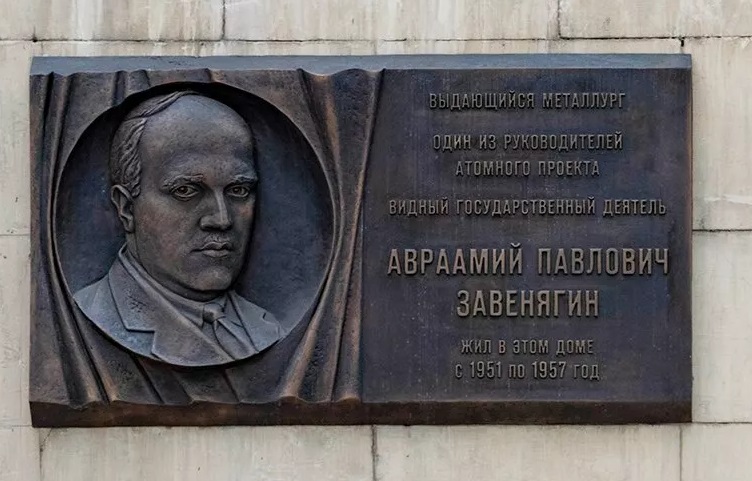
Avraamy Pavlovich Zavenyagin was born on April 14, 1901, at the Uzlovaya station of the Moscow-Kursk railway (now in the Tula region). His work ethic was shaped from childhood-his father was a steam locomotive driver. Coming from a large family, after graduating from the Skopin Real School in 1918, Zavenyagin actively engaged in socio-political activities. In the early 1920s, he headed party organizations in Uzlovaya, Skopin, and Yuzovka, was elected a member of the Central Executive Committee of the Ukrainian Republic, participated in mobilizing forces against Kolchak’s troops, formed an infantry division during Denikin’s offensive, and headed its political department. He also fought against bandit formations in Ukraine, leading the Revolutionary Committee in Starobelsk. In 1923, Zavenyagin entered the Moscow Mining Academy, graduating in 1930. As early as 1926, he became head of the academy’s administrative and economic department and was elected a member of the Moscow Soviet. His professional development was influenced by such prominent figures as the academy’s rector, I.M. Gubkin, and the People’s Commissar of Heavy Industry, Sergo Ordzhonikidze. From 1930 to 1941, Zavenyagin held a series of senior positions in the heavy industry sector: he was director of the Moscow Institute of Steel and the Leningrad State Institute for the Design of Metallurgical Plants (Gipromez), deputy head of the Main Directorate of the Metallurgical Industry of the Supreme Council of the National Economy (VSNKh), director of the metallurgical plant in Dneprodzerzhinsk and the Magnitogorsk Iron and Steel Works, as well as First Deputy People’s Commissar of Heavy Industry. He was instrumental in founding the Norilsk Mining and Metallurgical Combine and the city of Norilsk. In 1937, Zavenyagin was elected a deputy of the Supreme Soviet of the USSR from the Kyshtym district – a region where the Mayak plant, which produced the first samples of nuclear materials, would later be built. His organizational talent, deep knowledge, and ability to work with people allowed him to achieve outstanding results. He not only completed the construction of the Magnitogorsk plant but also became its first director. From 1937, as First Deputy People’s Commissar of Heavy Industry, he oversaw the construction of the Norilsk Combine, once again heading the enterprise after its launch. With the beginning of the Great Patriotic War, Zavenyagin was recalled to Moscow and soon appointed Deputy People’s Commissar of Internal Affairs. He was involved in the creation of the atomic industry in 1943. In December 1944, he was tasked with leading uranium ore mining operations. Under his leadership, the Special Metallurgical Administration was created within the structure of the NKVD-MVD, uniting the Leninabad Mining and Chemical Combine, Research Institute № 9 (now the A.A. Bochvar All-Russian Research Institute of Inorganic Materials), and a number of special institutes and laboratories that later became major scientific centers in the nuclear industry. From 1945, Zavenyagin became a member of the Special Committee under the State Defense Committee (later under the Council of Ministers of the USSR) and served as deputy to the “atomic” People’s Commissar B.L. Vannikov. In March 1953, he headed the reorganized First Main Directorate (PGU), and in July of the same year, he was appointed Deputy Minister of Medium Machine Building. From February 1955 until the end of his life on December 31, 1956, Avraamy Pavlovich served as Minister of Medium Machine Building of the USSR. He actively participated in recruiting personnel for the atomic industry, attracting specialists such as the future minister E.P. Slavsky and architect V.A. Saprykin. Under his leadership, key industry enterprises were created and reconstructed. On Zavenyagin’s initiative, work on creating the first domestic atomic bomb was concentrated in the specially established Design Bureau-11 (now the Russian Federal Nuclear Center – All-Russian Research Institute of Experimental Physics in Sarov). He oversaw all aspects of KB-11’s activities-from scientific programs to logistical support and social issues. In May 1945, Zavenyagin led a group of Soviet specialists sent to Germany to study German developments in atomic weapons. The expedition’s results included the discovery of approximately 100 tons of uranium and valuable equipment, which accelerated the creation of the first industrial reactor in the USSR. In August 1949, Zavenyagin personally participated in the preparation and testing of the first Soviet atomic bomb, RDS-1, at the Semipalatinsk test site. For the success of this work, he was awarded the title of Hero of Socialist Labor. He received his second Gold Star of the Hero in 1954 for his contribution to the creation of thermonuclear weapons. Among his awards are six Orders of Lenin. Colleagues and scientists noted his determination, initiative, deep understanding of technical issues, and respectful attitude toward specialists. A.D. Sakharov wrote of him as a leader who “listened very attentively to the opinions of scientists” and proposed reasonable technical solutions. Zavenyagin proved himself an outstanding organizer, combining engineering talent with a humane attitude toward people. According to contemporaries, his actions saved the lives of hundreds of Gulag prisoners. Biographers describe him as the embodiment of high culture, education, and technical erudition. As Minister of Medium Machine Building, he oversaw the creation of key scientific centers such as the Institute of Theoretical and Experimental Physics in Moscow, the Joint Institute for Nuclear Research in Dubna, the Physics and Power Engineering Institute in Obninsk, and the All-Russian Research Institute of Inorganic Materials in Moscow.
Address: Moscow, Povarskaya St., 31/29