Exhibition pavilion of the State Museum of Oriental Art at VDNH
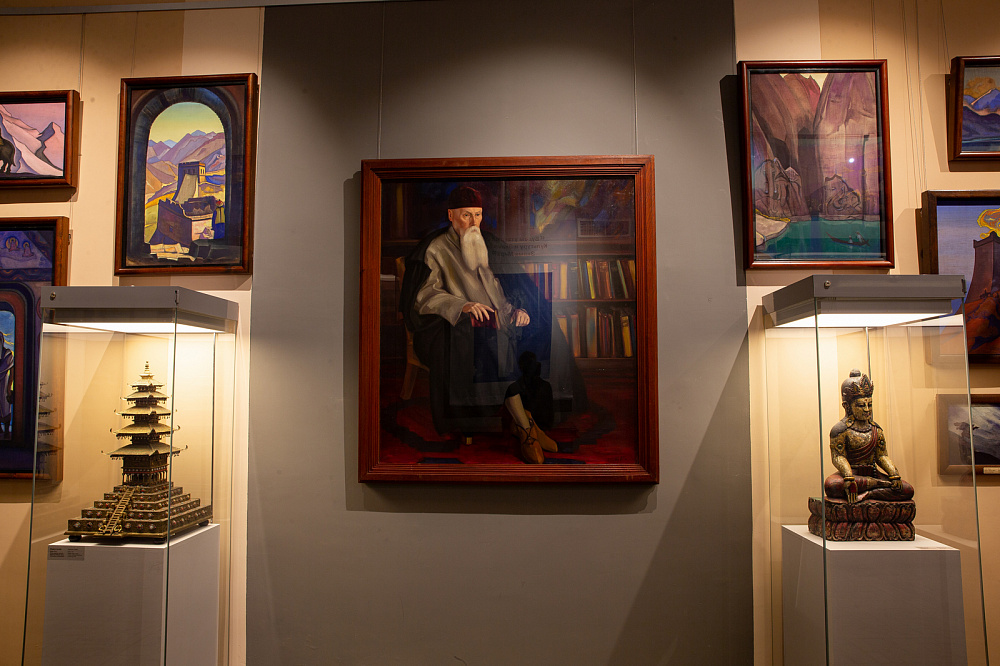
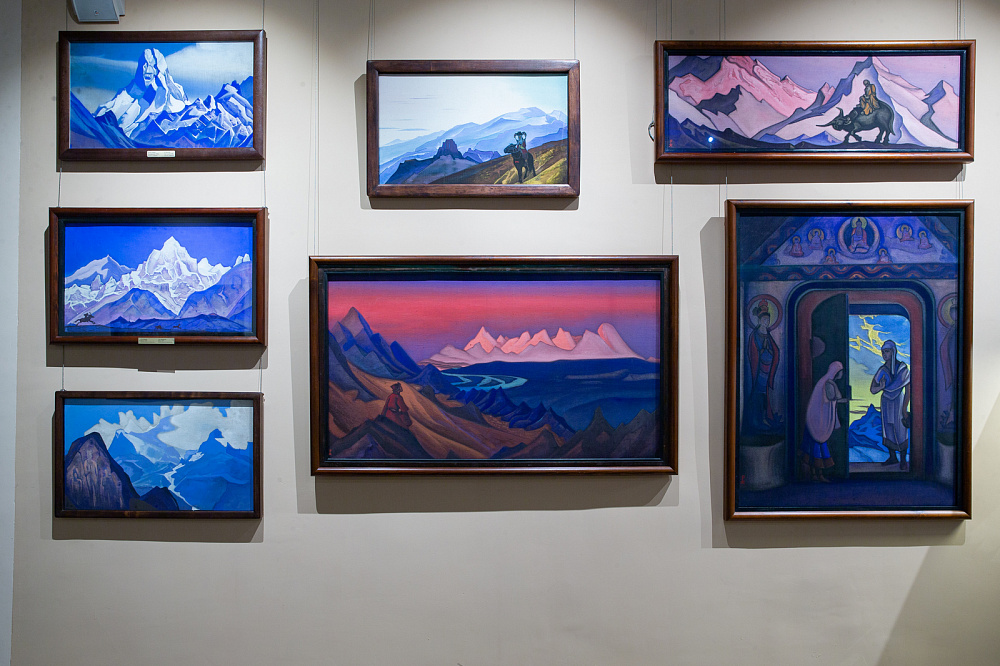
Pavilion № 13 at VDNH houses the exhibition pavilion of the State Museum of the East, presenting a large‑scale display drawn from the museum’s collections and featuring over 1,500 works, many shown for the first time. The displays span the Caucasus, Central Asia, the Far East, Southeast Asia, the Near and Middle East, and Africa. The section devoted to the Caucasus, Central Asia, and Northern Asia presents ceramics, carved wooden chests, small tables, screens, household utensils, and metalware (pitchers, samovars, copper dishes, bronze cauldrons), as well as textiles such as robes, skullcaps, and cushions. Northern Asia is represented by Nanai carpets, Yakut wooden utensils, and engraved walrus tusks by the Chukchi and Inuit. The South and Central Asia display – encompassing Tibet, India, and Iran – features wood carving, metal tableware, ceramics, bone artefacts, mosaic panels, and Buddhist bronze statues. South Asian metalwork includes Nepalese castings, images of Hindu deities, and tribal sculpture from India’s non‑Aryan populations. Weapons and defensive armour from India and Iran are also on view: helmets, shields, maces, and hatchets. The display further includes mystery masks, craft examples, and metal vessels decorated with chasing, engraving, and inlay. Southeast Asian art (Vietnam, Indonesia, Myanmar, Thailand, Cambodia, Laos) comprises stone sculpture of Ganesha from the 13th-14th centuries, carved wooden panels depicting episodes from the Ramayana and the Mahabharata, decorative masks, and facsimile reproductions of Vietnamese reliefs. Metal objects include a figure of the god of war, an altar lamp, a bowl with mythical animals, a dish depicting the birth of the Buddha, and sculptures of Cambodian theatre dancers. A monumental bronze incense burner illustrating scenes of rural life was presented by Ho Chi Minh to K.E. Voroshilov in 1957. Buddhist temple sculpture is represented by a large wooden statue of a seated Buddha (Vietnam, 18th-19th centuries), together with figures of the infant Buddha, the earth‑touching Buddha, a crowned Buddha, and a healing Buddha, all finished with lacquer and gilding. The Far Eastern section displays Chinese furniture with carving and inlay, a palace screen executed in cloisonné enamel, and objects in stone, metal, and porcelain. Japanese Meiji‑period art is represented by porcelain, vases, a screen featuring an eagle, metal vases for ikebana, and sculptures such as “Girl with a Lantern,” “Archer,” and “Ship of Happiness.” Korean art is shown through works by contemporary masters, notably original late ‑ 20th‑century ceramics. Also on exhibit are Chinese and Japanese porcelain from the 18th-19th centuries, Chinese wooden sculpture from the 19th-20th centuries depicting Taoist, Buddhist, and Confucian figures, and Buddhist statuary including images of Buddha, Guanyin, and a multi‑armed deity.
Address: Moscow, Mira ave., 119, p. 13