Korney Ivanovich
Chukovsky
1882-1969
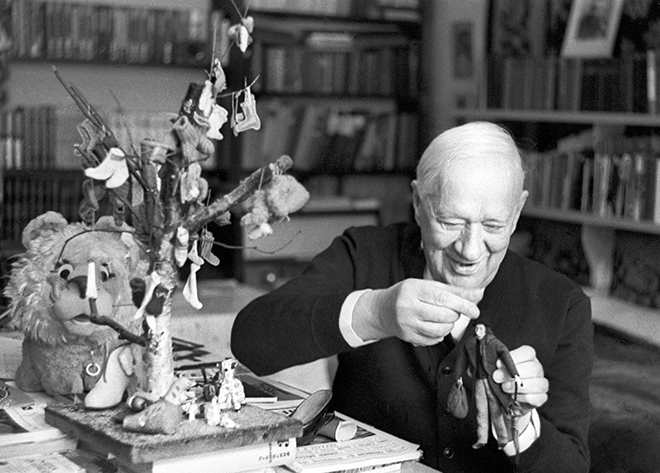
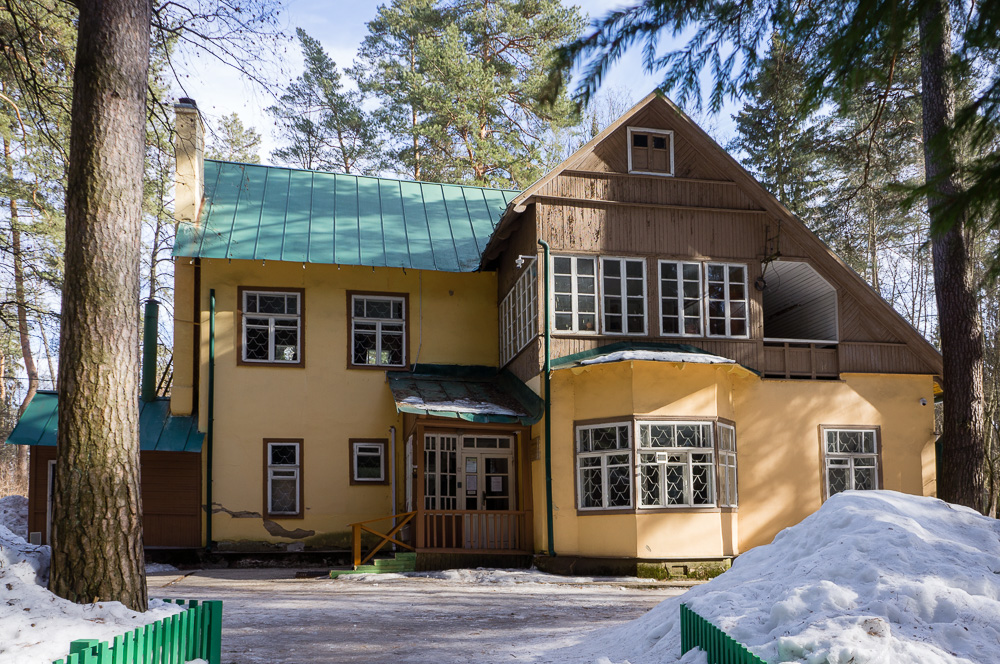
Korney Ivanovich Chukovsky (real name – Nikolay Korneychukov) was a Russian and Soviet poet, publicist, literary critic, translator, literary scholar, children’s writer, and journalist. He was a laureate of the Lenin Prize (1962) and a recipient of the Order of Lenin (1957). He remains the most published author of children’s literature in the Soviet Union and Russia. He was born on March 31, 1882, in St. Petersburg. His mother was a peasant. After being expelled from a gymnasium in Odessa in 1898, he began working and independently studied English and French. He started his literary career in 1901 as a correspondent for the newspaper «Odesskie Novosti». In 1903-1904, he worked in London. Since 1905, he lived in St. Petersburg. Since 1906, he collaborated with the magazine “Vesy” and other publications as a critic. In 1906, Chukovsky settled in Kuokkala (now Repino), where he met Ilya Repin, Maxim Gorky, Vladimir Mayakovsky, and other cultural figures. There, he began keeping the handwritten almanac «Chukokkala» and translating Walt Whitman. In 1916, at Gorky’s invitation, he began heading the children’s department of the «Parus» publishing house. After 1917, Chukovsky lived in Petrograd, participated in the work of the «World Literature» publishing house, and helped establish the «House of Arts». In the 1920s, he published his most famous children’s tales: «The Crocodile» (1917), «Wash-’em-Clean» (“Moidodyr,” 1923), «The Giant Roach» («Tarakanishche», 1923), «The Buzzing Fly» («Mukha-Tsokotukha», 1924), «Barmaley» (1925), and «Doctor Aybolit» («Aibolit», 1929). In 1928, the first edition of his book on children’s speech, «From Two to Five», was published. In the late 1920s, his fairy tales were criticized in the newspaper “Pravda,” leading to Chukovsky’s public renunciation of some of his works. Since 1938, Chukovsky lived in Moscow and in Peredelkino. During the Great Patriotic War, he was evacuated to Tashkent (1941-1943). In the post-war years, he published new fairy tales («The Stolen Sun», 1945) and worked on translations. He is the author of works on translation theory («The High Art») and research on the work of Nikolay Nekrasov (the book «Nekrasov’s Craft», 1952). In 1962, he received the Lenin Prize. Chukovsky was awarded the degree of Doctor of Philological Sciences (1957) and the title of Doctor of Literature from the University of Oxford (1962). After his death in 1969, his dacha in the writers’ village of Peredelkino was turned into a memorial House-Museum. The village was built in the mid-1930s, and the dacha is a typical example of the architecture of that time. The interior of the house, where the writer lived from 1938, was fully preserved by his daughter Lidiya Korneevna and granddaughter Yelena Tsezarevna Chukovskaya, who also became the first tour guides. Since 1994, after a two-year restoration, the House-Museum has operated as a department of the State Literary Museum. Its first director was the literary scholar and sound archivist Lev Shilov (1932-2004). The House-Museum houses a children’s library founded by Chukovsky in 1957. The writer considered its creation one of the main endeavors of his life. The initial collection of 400 books has grown to over 10,000 volumes. The library includes several memorial sections: «The Old Rack» – the inspiration for the library’s creation; “The Study” – a recreated workspace with the writer’s personal belongings; and “The Pioneer Room” – an exhibition dedicated to Soviet childhood. The library’s pride is a unique collection of books with autographs from authors such as Samuil Marshak, Lev Kassil, Valentin Kataev, Eduard Uspensky, and others.
Address: Moscow, Serafimovicha St., 3