I.B. Auerbach Geological and Mineralogical Museum
The I.B. Auerbach Geological and Mineralogical Museum, part of the Russian State Agrarian University – Moscow Timiryazev Agricultural Academy (Timiryazev Academy), far exceeds the scope of a typical classroom museum. Its collection has outstanding scientific and historical significance, making it a notable institution in both academic and museum circles. The museum’s origins are closely tied to the history of the Petrovsky Agricultural and Forestry Academy. The introduction of a mineralogy and geology course in 1865 provided the institutional foundation, and the 1866 appointment of the distinguished mineralogist I.B. Auerbach as department head shaped its future. Auerbach became the founder and first director of the Mineralogical Cabinet, the direct predecessor of the modern museum. The collection’s core was formed by his personal, systematically assembled holdings, which he, as a dedicated researcher and collector, expanded over decades. Auerbach placed great importance on visual teaching aids and sought to expose students to as many natural specimens as possible; this concept became the museum’s guiding principle. Significant additions resulted from field research – in particular studies of the Moscow region coal basin – as well as acquisitions from respected specialists. The exhibition was further enriched by mineral donations from professors such as V.I. Vernadsky, V.V. Nikitin, and V.A. Obruchev. The museum’s modern collection, totaling several thousand cataloged items, is organized according to a clear scientific structure and includes these main sections:
– Systematic collection – demonstrates the diversity of mineral species according to classical crystal-chemical systematics (based on the K. Hutzkov classification). Includes reference specimens of high scientific value, notably samples from classical, now often exhausted, deposits in Russia and Europe.
– Regional (local history) section – describes the geological structure and mineral resources of Central Russia, with an emphasis on the Moscow region. Contains representative rock samples, paleontological finds (including Carboniferous fauna), and brown coal samples from the Moscow basin.
– Genetic collection – illustrates the physicochemical processes of mineral genesis under various natural conditions. A related thematic section highlights the applied significance of minerals, reflecting the university’s practical orientation.
– Author collections – natural crystal collection of Professor E.S. Fedorov; paleontological collection of Professor G.A. Trautschold; meteorite collection of Professor I.B. Auerbach; and agronomic ore and phosphorite collections of Professor Ya.V. Samoilov.
– Collection of instruments, tools, and accessories.
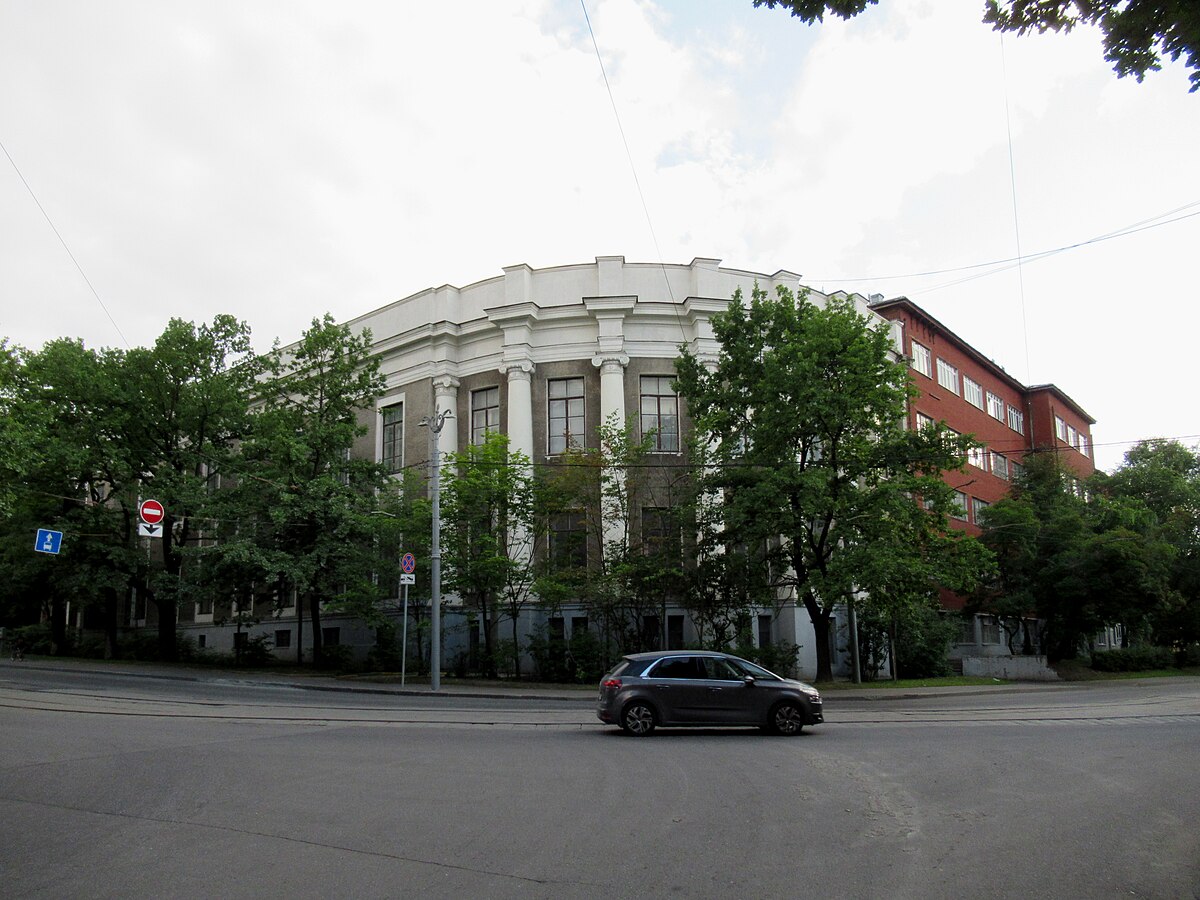
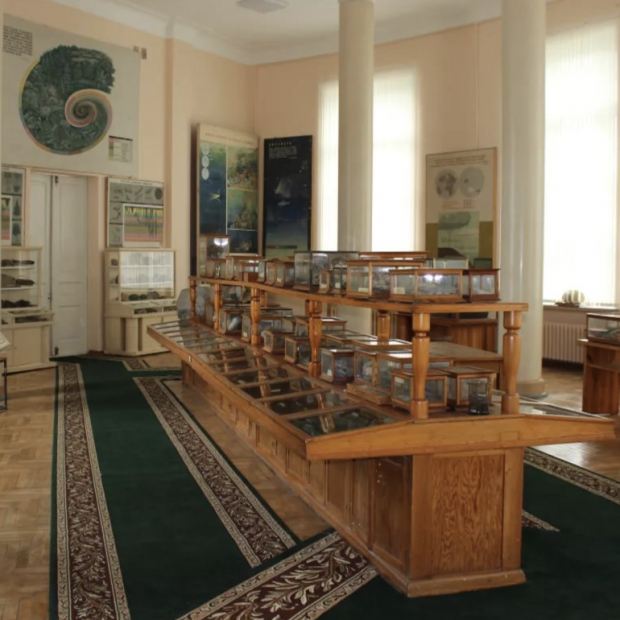
Among the museum’s most valuable exhibits are large druses and rock crystal specimens; malachite and azurite from Ural deposits; beryls from the Ilmen Mountains; minerals rare for central Russia; and meteorites. Of particular historical and scientific interest are specimens personally collected by I.B. Auerbach and his contemporaries in the 19th century, many of which retain their original labels. In 1924 the museum was officially named after its founder. It is housed in Building 17 (the New Building) of the Timiryazev Academy. The exhibition harmoniously combines modern display cases with carefully preserved and meticulously restored 19th-century cabinets. This blend emphasizes continuity of tradition, presents rare items in their historical context, and creates a unique atmosphere in which contemporary display technologies coexist with authentic antique objects. The activities of the Geological and Mineralogical Museum are multifaceted. In addition to supporting the educational program for the university’s students, it serves as an important resource for professional geologists, mineralogists, and historians of science, acting as custodian of the tangible heritage of Russian geological thought. True to the mission set by its founder, the museum continues to popularize geological knowledge and to preserve a unique collection that stands as a tangible chronicle of mineralogical research in Russia.
Address: Moscow, Timiryazevskaya St., 55