N.M. Kulagin Zoological Museum

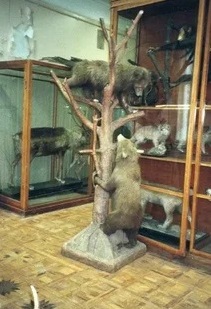
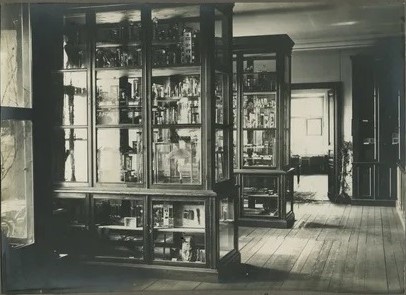
On the grounds of the Timiryazev Academy, among academic buildings and experimental fields, there is a place where one can travel through the history of the animal kingdom. The Zoological Museum named after Nikolai Mikhailovich Kulagin is more than display cases of taxidermy; it is a serious scientific resource where students, faculty, and even schoolchildren explore the remarkable diversity of Earth’s fauna. The museum’s history is inseparable from the name Nikolai Mikhailovich Kulagin. In 1894 he became an adjunct professor at the Moscow Agricultural Institute and headed the Department of Zoology for nearly fifty years. As Academician B.E. Bykhovsky observed, Kulagin made a major contribution to theoretical zoology, organized departments of pond fish farming, beekeeping, and entomology, engaged in nature conservation, and trained game managers. The first exhibits were collected by staff and students of the Department of Zoology, and the collection gradually took shape. The museum officially opened in 1939. Its holdings were later significantly enriched by materials collected by Professors B.A. Kuznetsov and A.A. Paramonov. The exhibition follows the classical systematic principle – from the simplest invertebrates to the highest mammals. A walk through the hall becomes a fascinating climb up the evolutionary ladder. The invertebrate section includes extensive collections of mollusks, crustaceans, insects (the most numerous group), and echinoderms. The fish section’s pride is a mounted specimen of a giant beluga, an important commercial species. Amphibians and reptiles are represented by key species. The bird collection emphasizes domestic and commercially important species and includes mounted specimens, eggs, and skeletal preparations. Among mammals, visitors can see large predators and ungulates; notable exhibits include mounted elk, European bison, reindeer, wild boar, and wolves. Ancestors and wild relatives of domestic animals are displayed separately. Of special interest are collections of ungulate horns from both domestic and African species, fossils, and exhibits showing color morph variation in foxes and breeds of rabbits and nutria – clear examples of how humans influence animals’ morphological diversity. Some items are truly unique and of global scientific significance. These include a fossilized skull of a woolly rhinoceros, a relic of the Pleistocene that lived in what is now Russia thousands of years ago, and specimens prepared around the turn of the 19th-20th centuries by notable taxidermists F.K. Lorenz and D.Ya. Fyodorov. These objects are not just biological specimens but genuine works of museum art with historical and cultural value. The Zoological Museum is both an exhibition space and an educational base. Undergraduate and graduate students in Biology and Animal Science hold practical classes here. The collection continues to develop and adapt to modern educational needs. Today the museum hosts classes for students, specialized courses for schoolchildren, and programs for evening students. It strives to preserve its collections while actively integrating into contemporary educational initiatives.
Address: Moscow, Timiryazevskaya St., 44, building 1