Monument «In honor of the 400th anniversary of the liberation of Moscow by the second People’s Militia under the leadership of Prince D.M. Pozharsky and Zemstvo headman K. Minin»
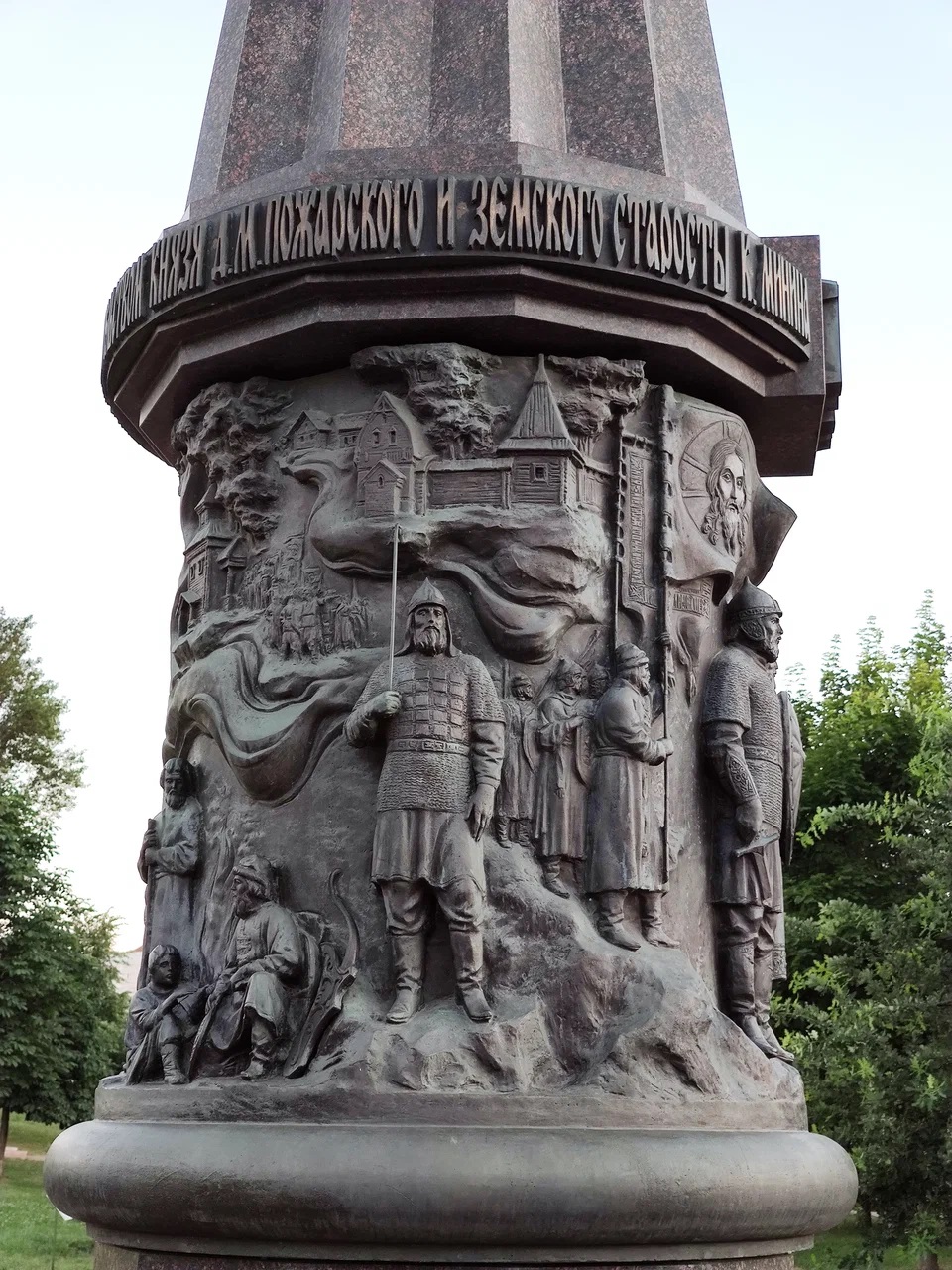
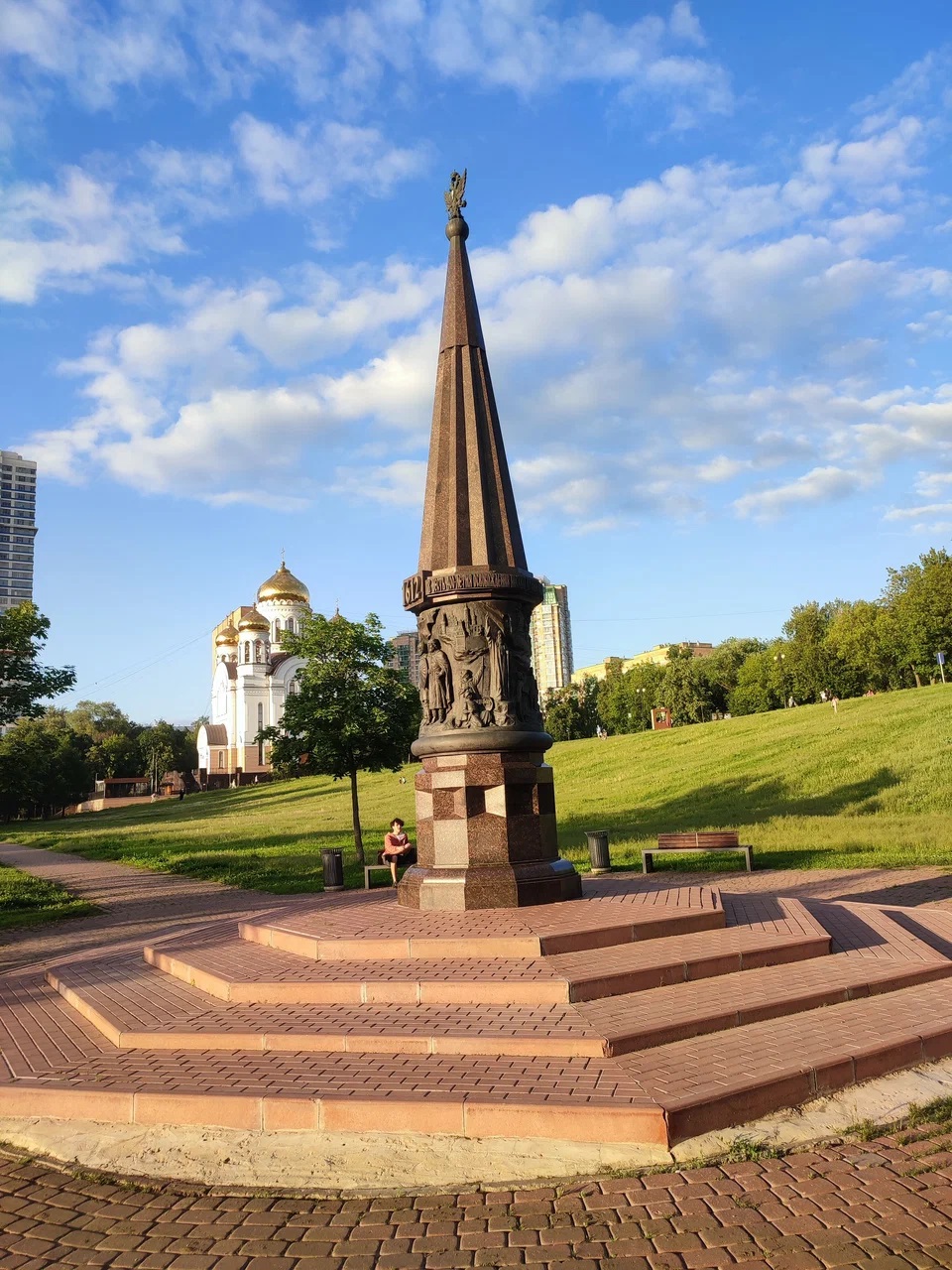
In the structure of Moscow’s memorial culture dedicated to key events of national history, a special place is occupied by the monument in honor of the 400th anniversary of the liberation of Moscow by the second people’s militia led by Prince Dmitry Mikhailovich Pozharsky and district elder Kuzma Minin. This monument is located in the Rostokino Aqueduct Park (also known as part of the Yauza Park recreational zone). The solemn opening ceremony took place on November 3, 2012, timed to coincide with the anniversary of the events of autumn 1612, when the combined forces of the militia liberated the capital from Polish-Lithuanian interventionists, which became a turning point in the end of the Time of Troubles. From the perspective of composition and form, the monument is an monumental eight-meter stele made of granite with a characteristic tent-like shape. The vertical dominant is crowned by a sculptural image of the state emblem of the Russian Federation – a bronze double-headed eagle. The column is mounted on a concise pedestal. A significant element enriching the object with historical narrative is the complex of high reliefs placed in the lower part of the stele. According to the description by the authorial team, the relief images sequentially illustrate key episodes of 1612: the central figures of the organizers and leaders of the militia – Kuzma Minin and Prince Dmitry Pozharsky; the historical camp of Russian troops located in 1612 on the bank of the Yauza River; the movement of the military militia towards Moscow; a symbolic image of the walls of the Moscow Kremlin as the goal and symbol of liberation; the image of Patriarch Hermogenes, whose spiritual and political position became one of the mobilizing factors during the Time of Troubles. The authorship of the artistic project belongs to a team led by People’s Artist of the Russian Federation A.N. Kovalchuk. The architectural part was developed by M.V. Korsi. The materials used in the manufacture of the monument are traditional for federal memorials: bronze for the coat of arms and high reliefs, and granite for the main stele and pedestal, which guarantees the object’s durability and resistance to external influences. The choice of location for the monument has a documented historical basis and is an element of “historical topography.” According to historical research and chronicle sources, it was in this area, at the intersection of the Yauza River and the ancient Troitskaya Road (whose route generally corresponds to modern Mira Avenue), that the camp of the second people’s militia was deployed in the autumn of 1612 before its decisive advance on Moscow, which was occupied by interventionists. The monument in the Rostokino Aqueduct Park is integrated into the citywide program for preserving historical memory and performs several social functions. It is a point of attraction both for tourists interested in Russian history and for residents of nearby districts. Its role especially increases on days of official state holidays, primarily on National Unity Day (November 4), when flowers are laid at the foot of the stele, official ceremonies and educational events for youth are held. This ritual emphasizes the continuity of historical tradition and the civic significance of remembering the overcoming of the Time of Troubles.
Address: Moscow, Rostokinsky Aqueduct Park