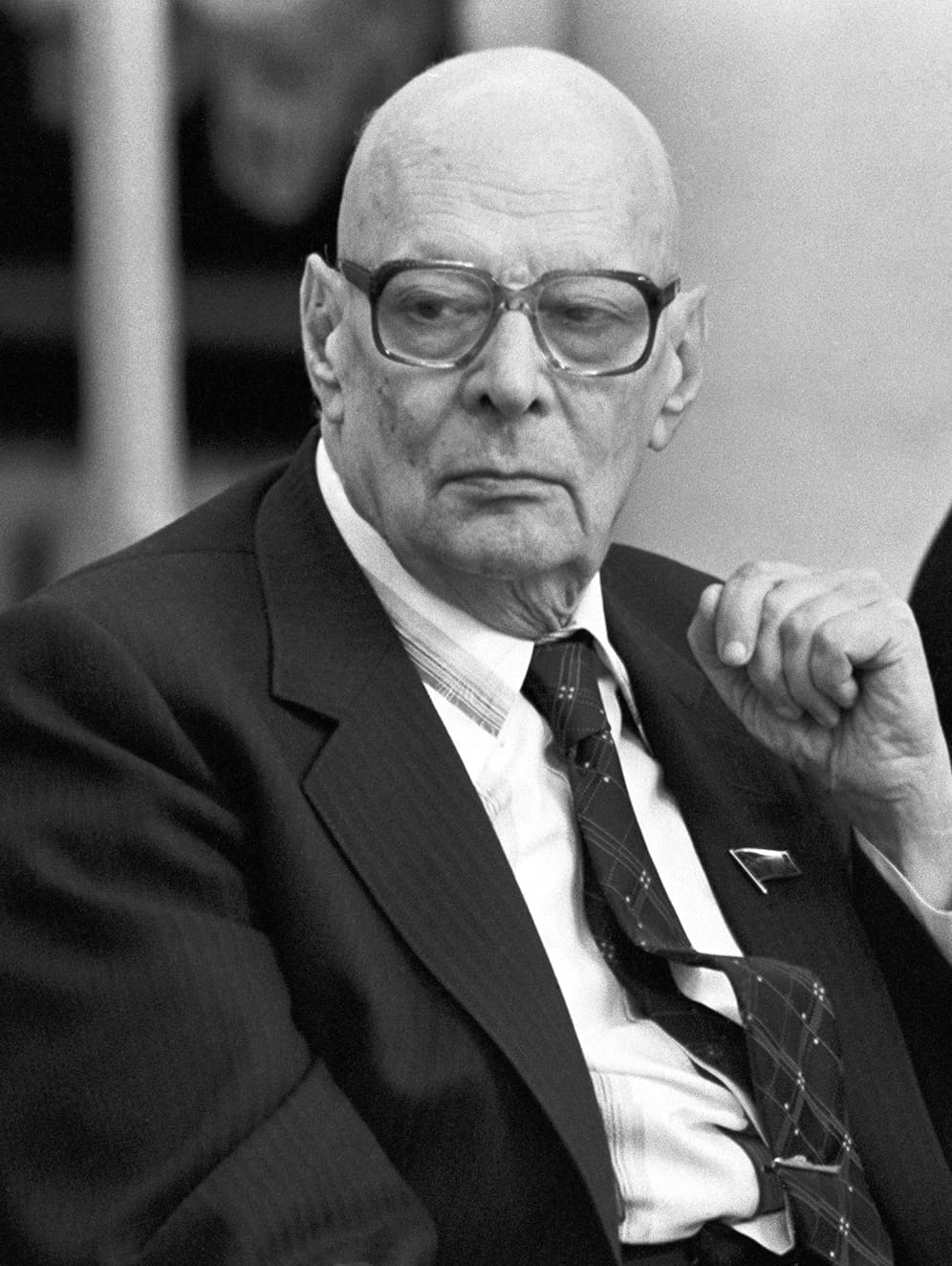
Anatoly Petrovich
Alexandrov
1903-1994

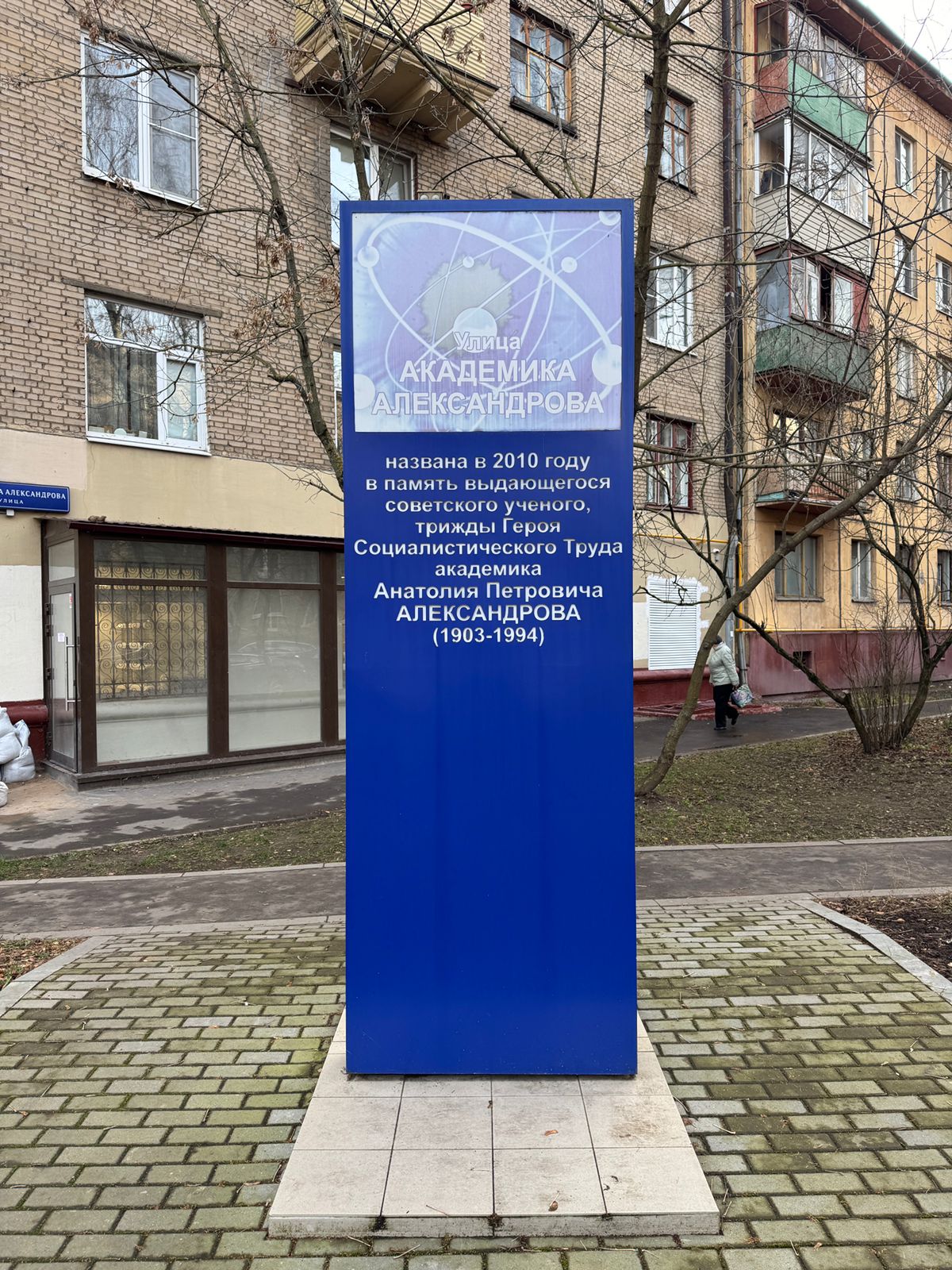
Anatoly Petrovich Alexandrov served as Director of the Institute of Physical Problems of the USSR Academy of Sciences (1946-1955) and later as Director of the I.V. Kurchatov Institute of Atomic Energy. An Academician of the USSR Academy of Sciences and a three‑time Hero of Socialist Labour, he ranks among the leading figures of twentieth‑century Russian science. His wide‑ranging work – from fundamental research in the physics of dielectrics to the realization of large‑scale scientific and technical projects – decisively influenced the development of nuclear energy, shipbuilding, and Arctic navigation in the Soviet Union. Alexandrov combined original scientific vision with an uncommon ability to turn ideas into practical technological solutions, strengthening national defence and contributing to the country’s economic development. One of his most important wartime achievements was the development and widespread implementation of a degaussing (demagnetization) system to protect naval vessels. The method, associated with the Leningrad Physico‑Technical Institute (the “LPTI method”) and developed under the leadership of A.P. Alexandrov and I.V. Kurchatov, greatly reduced ships’ magnetic signatures and made them far less vulnerable to German magnetic mines. According to the Central Naval Archive, this technology saved hundreds of ships and thousands of sailors’ lives and helped maintain vital maritime communications during critical periods of the war. In the postwar years Alexandrov led the pioneering effort to create the world’s first nuclear‑powered icebreaker, Lenin. That project required solving complex scientific and technical problems related to a compact, safe nuclear power plant capable of long‑term autonomous operation in extreme Arctic conditions. The Lenin’s commissioning in 1959 opened a new era in northern navigation, enabling year‑round shipping and more effective development of the region’s natural resources. After I.V. Kurchatov’s death in 1960, Alexandrov became head of the Institute of Atomic Energy and emerged as a central figure in the Soviet nuclear programme. Under his scientific and administrative leadership, new reactor types were developed and deployed, including high‑power channel‑type reactors (RBMK), which formed the basis of many Soviet nuclear power plants. He was a consistent advocate of nuclear energy as a strategic means to secure the nation’s energy independence. Alexandrov’s scientific stature and leadership were further recognized when he served as President of the USSR Academy of Sciences from 1975 to 1986. His honours include being three times named Hero of Socialist Labour, and receiving the Lenin Prize and the State Prize. His legacy endures in scientific literature and in commemorations: a research and technology institute in Sosnovy Bor and the oceanographic research vessel Akademik Alexandrov bear his name, and a street in Moscow’s Shchukino district is also named after him.
Address: Moscow, Akademika Alexandrova St.