Boris Nikolaevich
Laskorin
1915-1997
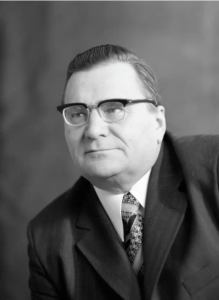
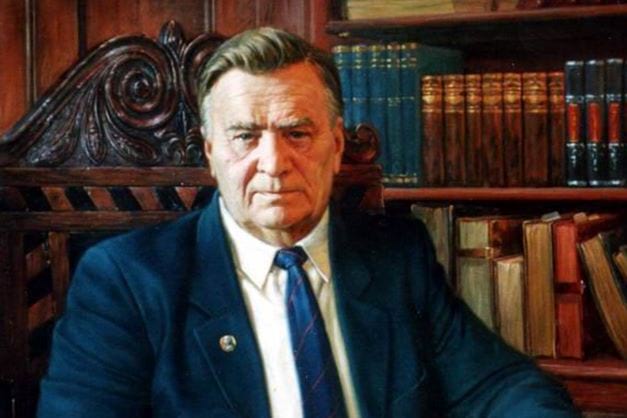
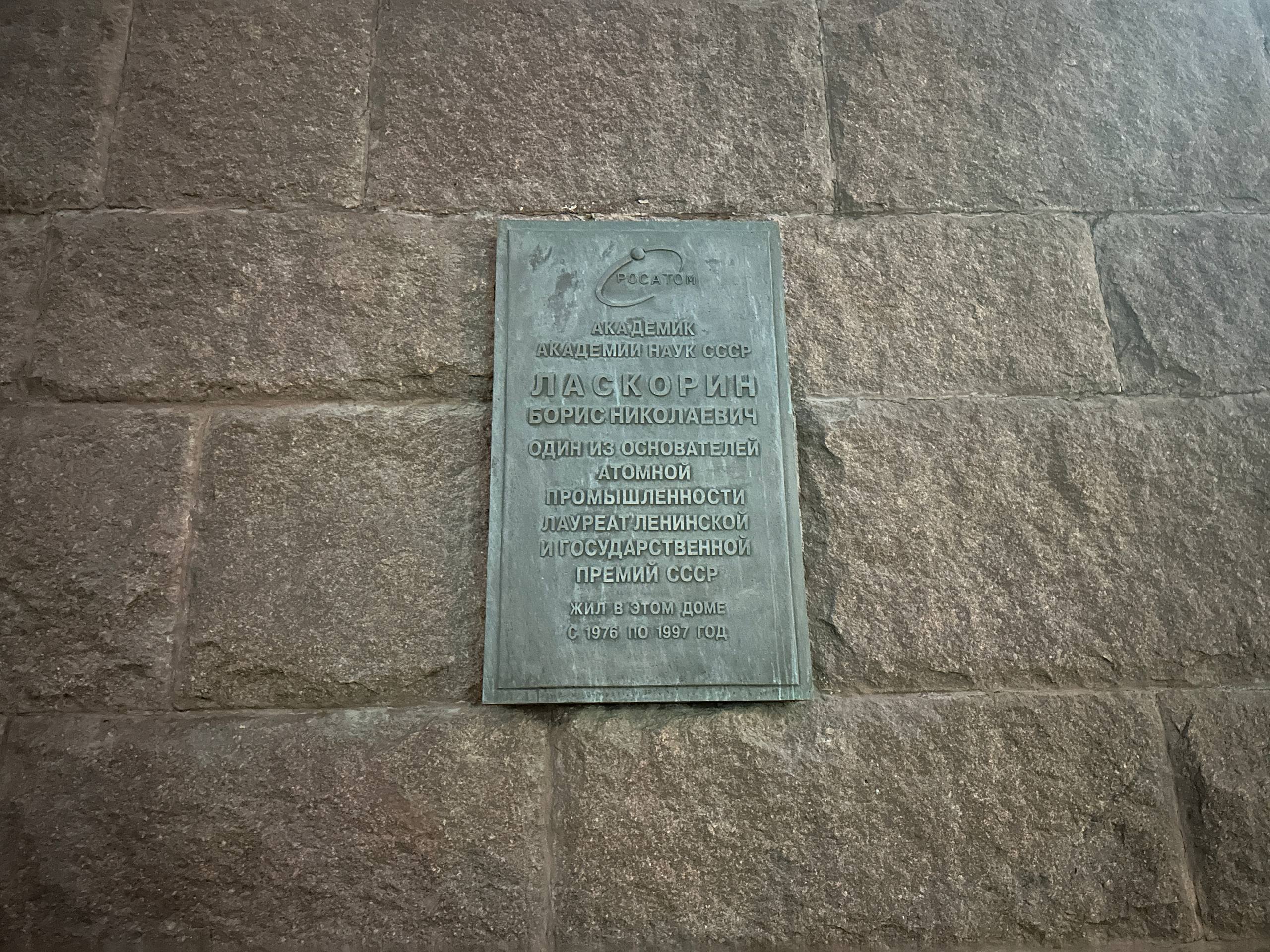
Boris Nikolaevich Laskorin was a Soviet and Russian scientist in the fields of chemical technology, hydrometallurgy, and radiochemistry. He was an Academician of the USSR Academy of Sciences (1976, from 1991 – Russian Academy of Sciences), Doctor of Technical Sciences (1956), Professor (1957), and a recipient of the Lenin Prize (1958) and the USSR State Prize (1978). He was one of the founders of industrial technologies for processing uranium ores and extracting strategic metals in the USSR, and the author of over 600 inventions. He was awarded the Orders of the Red Banner of Labour (1951), Lenin (1975, 1985), the October Revolution (1981), and many medals. He was also honored as Honored Inventor of the RSFSR (1964) and received the USSR Council of Ministers Prize (1983, 1987) and the V.G. Khlopin Prize (1983). He was born on July 25, 1915, in Brest-Litovsk. In 1938, he graduated with honors from the Faculty of Chemistry at Kiev State University. Starting in 1938, he worked at Research Institute No. 26 (NII-26) in Elektrostal, where he was involved in developing chemical protection agents, including during the Great Patriotic War. He defended his Candidate’s dissertation in 1946. From 1952 until the end of his life, he worked at the All-Union Scientific Research Institute of Chemical Technology (VNIICHT, formerly NII-10), where he progressed from laboratory head to deputy director for scientific work (from 1968). Laskorin’s main scientific and technological achievements were associated with the creation and industrial implementation of hydrometallurgical processing methods for mineral raw materials. Under his leadership, a continuous, filterless sorption process for extracting uranium directly from ore pulps was developed and implemented on an industrial scale for the first time in the world. This technology, mastered in the late 1950s and early 1960s, enabled the rapid creation of a powerful uranium industry in the USSR and Eastern Bloc countries, providing raw materials for the nuclear sector. Another crucial area of his work was the creation and implementation of sorption technologies for the extraction and purification of precious metals, primarily gold. The gold sorption leaching method developed under his leadership, using synthetic sorbents (specifically based on styrene-divinylbenzene copolymers), made it possible to efficiently process poor and refractory ores, obtaining high-purity metal. This technology became widespread and internationally recognized. Laskorin also made significant contributions to solving problems in radiochemistry, including the development of technologies for the extraction and purification of plutonium, as well as methods for cleaning gas emissions from radioactive iodine, which are still used today. He was one of the pioneers in applying extraction and membrane methods in hydrometallurgy. Under his scientific guidance, a major school of specialists in sorption, extraction, and hydrometallurgy was established; he supervised over 100 Ph.D. students and 15 Doctor of Science candidates. He actively participated in solving environmental problems, chaired the USSR Academy of Sciences Commission for the Protection of Natural Waters, and opposed several environmentally hazardous projects. He also took part in the efforts to liquidate the consequences of the Chernobyl Nuclear Power Plant accident.
Address: Moscow, Kotelnicheskaya nab., 1/15 , bldg. VK