Sergei Petrovich
Kapitsa
1928-2012
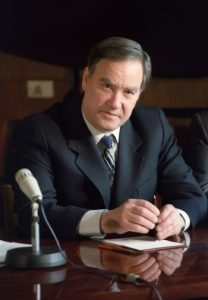
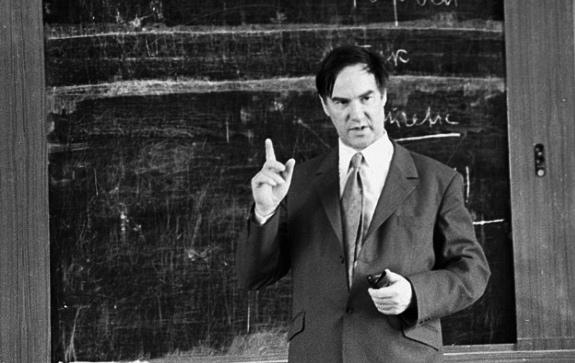
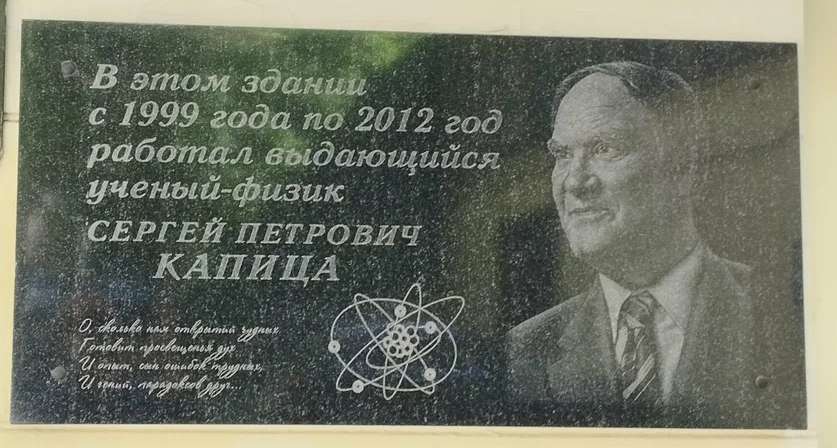
Sergei Petrovich Kapitsa was a Soviet and Russian physicist, educator, and television presenter. He held a Doctorate in Physical and Mathematical Sciences (1962), was appointed Professor in 1965, led a department at the Moscow Institute of Physics and Technology (MIPT), and served as a chief researcher at the P. L. Kapitsa Institute for Physical Problems. In 2010 he was named an Honorary Professor of Moscow State University. He was born in Cambridge into the family of future Nobel laureate Pyotr Kapitsa and the granddaughter of noted naval engineer Alexei Krylov; Ivan Pavlov was his godfather. The family’s return to the USSR in 1935 and his father’s work at the Institute for Physical Problems provided the exceptional intellectual environment in which his scientific interests developed. After graduating from the Moscow Aviation Institute, Sergei Kapitsa began his career at the Institute for Physical Problems. His principal scientific achievement was the creation of the microtron – an original type of particle accelerator – for which he received the USSR State Prize and a doctoral degree. Equally important was his contribution to education: for more than 30 years he headed the Department of General Physics at MIPT, training generations of physicists and promoting critical thinking and scientific independence. Kapitsa became a national figure in 1973 with the launch of the television program Ochevidnoe – neveroyatnoe (The Obvious and the Incredible). For nearly four decades he presented complex modern science with clarity, artistry, and respect for his audience, helping to bring scientific ideas into popular culture. Later in life Kapitsa made a notable contribution to demography. He proposed a phenomenological model of the hyperbolic growth of Earth’s population, emphasizing the decisive role of information exchange and social interactions in civilizational development. His forecast of population stabilization near 14 billion remains a topic of scholarly discussion. Kapitsa’s scientific curiosity extended to adventurous pursuits: he was among the first Soviet scuba divers and also practiced mountaineering and parachuting. His achievements were recognised with high state honours and he holds a Guinness World Record for the longest tenure as the host of a single television program. The Kapitsa scientific dynasty is commemorated in space: asteroids honour both father (3437 Kapitsa) and son (5094 Seryozha). A commemorative plaque marks the building where Sergei P. Kapitsa worked.
Address: Moscow, Radio St., 22