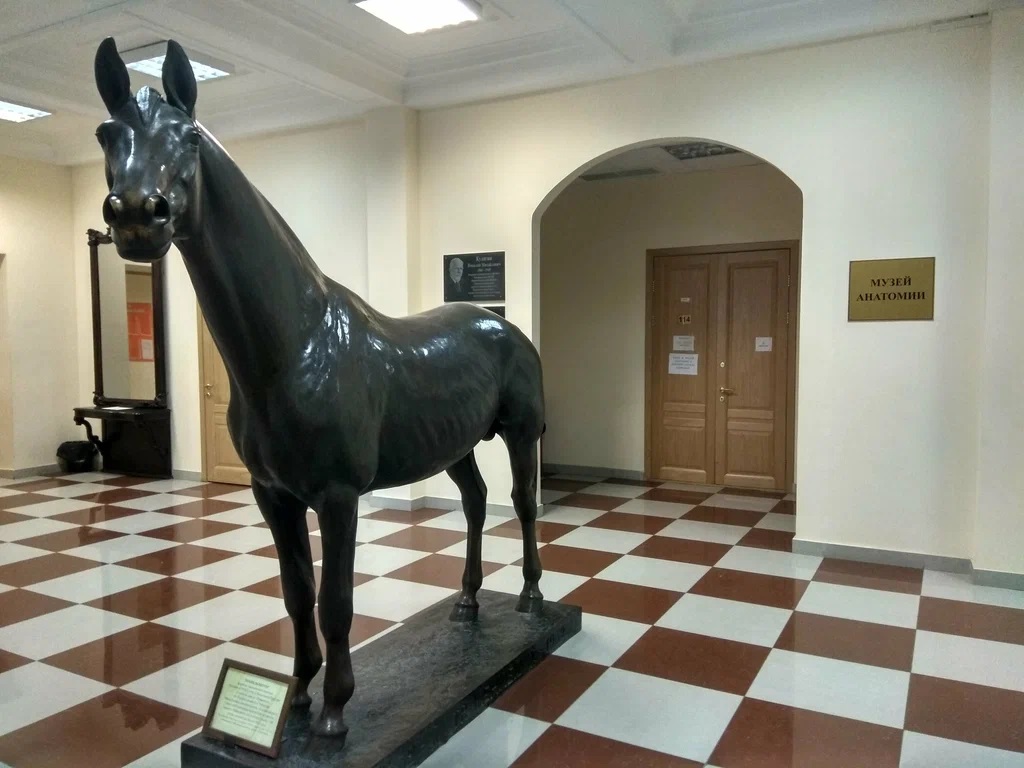
B.K. Gindze Museum of Anatomy
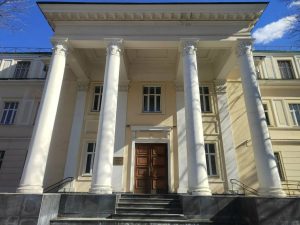
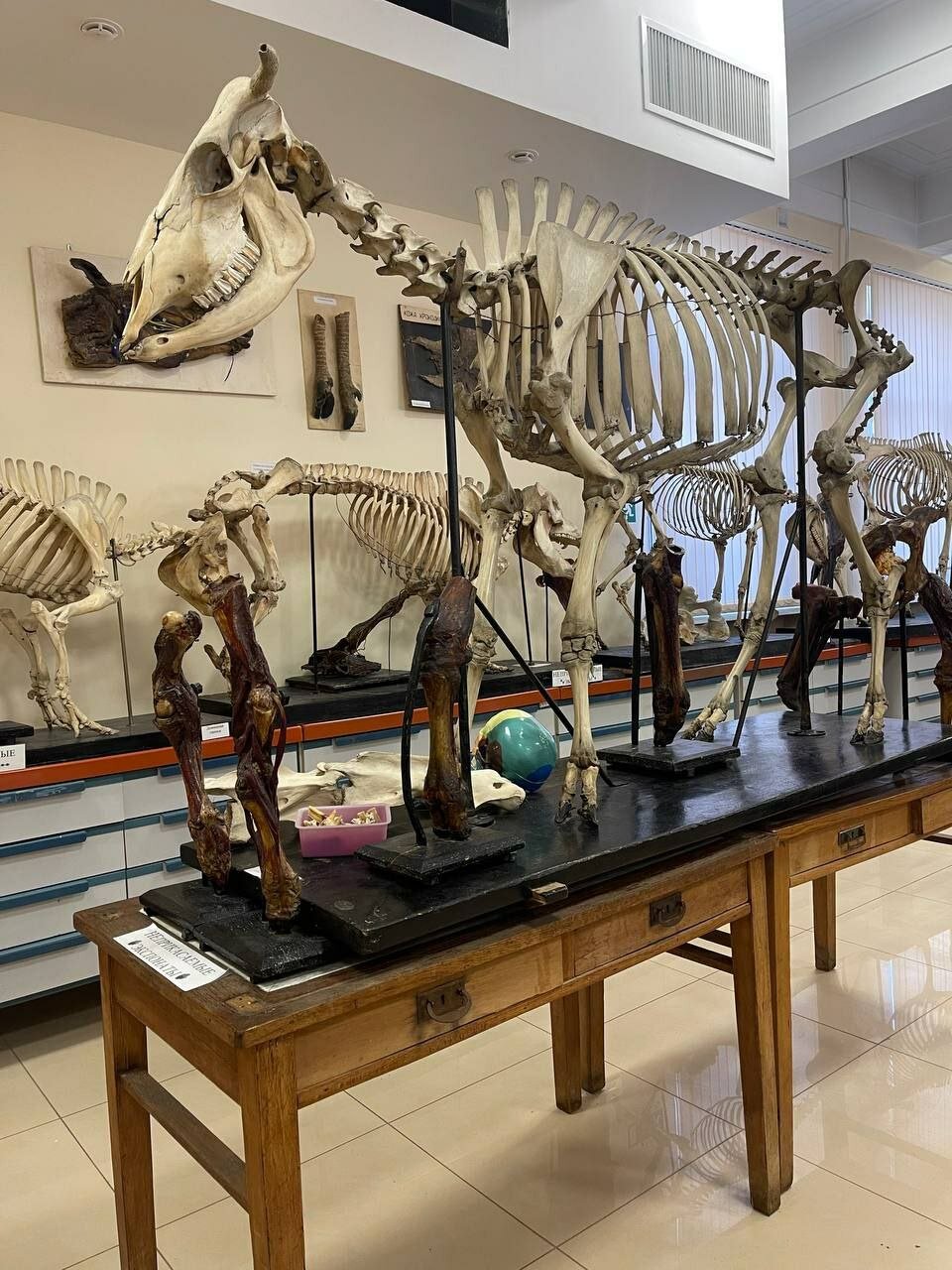
The official opening date of the Anatomy Museum at the Timiryazev Agricultural Academy is considered to be September 2, 1940, as recorded by the start of the Anatomicum’s visitor log; the museum was originally a structural subunit of the Anatomicum. The founder and driving force behind its creation was the first head of the Department of Animal Anatomy and Histology, Professor Boris Konstantinovich Gindtse (1881-1953). As early as 1935, under his leadership, construction began on a specialized academic building – the Anatomicum (now Academic Building №16) – designed specifically for teaching anatomy and histology. The building originally included lecture halls and laboratories as well as spaces for two key exhibitions: a scientific collection and a teaching collection. Academy students continue to study morphological disciplines within these walls to this day. The core of the original collection consisted of items personally assembled by B.K. Gindtse during his time at the Medical Faculty of Moscow University, where he served as vice‑rector (from 1921) and as a lecturer (1925-1930). Among these were materials on anthropogenesis, notably precise replicas of models from the Darwin Museum created by Gindtse, and an extensive collection of human anatomical specimens, including stages of embryogenesis. Gindtse’s scientific focus on the arterial system of the brain in humans and domestic animals enabled the formation of a unique national collection of corrosion preparations of mammalian cerebral vessels. The museum’s scientific exhibition is notable for its systematic breadth and continues to expand. It includes fundamental collections created by the department’s leading morphologists: V.Ya. Brovar’s comparative and age‑series preparations of the locomotor apparatus and V.I. Ippolitova’s research, which formed the basis for an extensive collection on the nervous system of domestic mammals. This material base supports ongoing scientific research and is regularly updated by department staff, postgraduates, and alumni. The teaching exhibition is organized in strict accordance with the curriculum and provides detailed visual aids that allow students to study key course sections independently. The osteological collection includes complete skeletons of major domestic animal and bird species and individual bone preparations that demonstrate species‑specific and age‑related features. Muscular system preparations, including complex neuromuscular and neuro‑vascular‑muscular specimens, are well represented. Major sections cover the macroscopic anatomy of the digestive, respiratory, urinary, and reproductive systems, as well as the sense organs, skin and its derivatives, and the nervous and cardiovascular systems. The museum is actively integrated into the educational process: its exhibits are used to demonstrate organ form, internal structure, and topography during practical and seminar classes. A separate section presents comparative anatomy of chordates, showing evolutionary series from lancelet to mammals. To enhance learning, the museum is equipped with a histology classroom and multimedia technologies for lectures and practical sessions. Beyond its primary educational role, the museum performs an important outreach mission: thematic excursions and classes are regularly held for academy students, students from other universities, schoolchildren, and anyone interested in biology and morphology. Thus the Anatomy Museum of the Timiryazev Academy, while preserving its historical heritage, remains a living and evolving educational and scientific center, continuing the traditions established by its founder, Professor B.K. Gindtse.
Address: Moscow, Timiryazevskaya St., 44, building 1