Listvennichnaya Alley
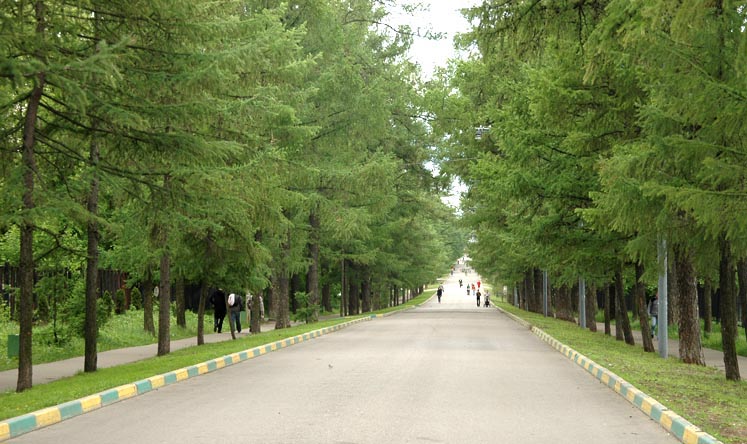
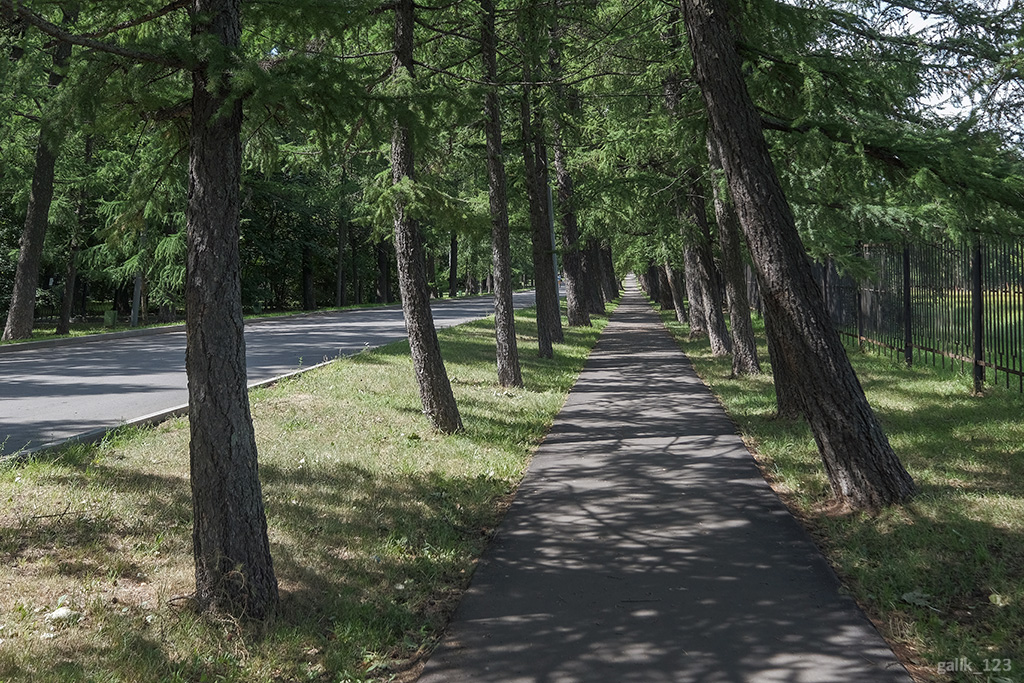
In Moscow’s Timiryazevsky District, between Timiryazevskaya Street and Dmitrovskoye Shosse, lies Listvennichnaya Alley – a place where history comes alive at every step. Today it is a quiet pedestrian zone, but once the estate bustled with life here, a scientific school formed, and traditions were established that have endured to this day. The alley’s history dates back to the 1750s, when, by order of Count G.K. Razumovsky, a road was laid from the Dmitrovsky highway to the Petrovskoye estate. This transport artery shaped the area’s future layout. The district received a new impetus between 1861 and 1865 with the opening of the Petrovsky Forest School, later transformed into an academy, which for many years cemented the area’s status as an educational and scientific center. A decisive moment came in 1863 when R.I. Schroeder planted Siberian larches along the road. Those trees later gave the street its name – in 1925 it was officially designated Listvennichnaya (Larch) Alley. In the late 1920s and early 1930s the alley’s architectural appearance changed. Educational buildings and student dormitories in the constructivist style – a symbol of a new era – were erected. The renowned architect B.M. Iofan, whose works helped define the area’s character, participated in the designs. During the Great Patriotic War the alley became a place of lifesaving care: № 14 housed Evacuation Hospital № 2386 (serving first the Western, then the Third Belorussian Front). Over the war years some twelve thousand wounded soldiers and officers were treated there, and the building today preserves the memory of the medics’ feat. In the mid‑1990s the alley was made fully pedestrian, solidifying its status as a favorite walking spot open to anyone who wishes to touch history. Today Listvennichnaya Alley features several significant landmarks, including the Agronomy Faculty building of RSAU-MTAA (№ 3), the academy’s Palace of Culture (№ 12A), student dormitories (№ 14 and 16), and the Horse Breeding Museum (№2B). Notable monuments honor outstanding scientists and statesmen – R.I. Schroeder, N.I. Zheleznov, I.A. Stebut, N.I. Vavilov – and there is also a monument to V.I. Lenin. The “Glory to Warrior‑Drivers” memorial, commemorating drivers’ contributions to victory in the Great Patriotic War, is another point of interest. Listvennichnaya Alley is not just a street but a keeper of time. The Siberian larches planted a century and a half ago, the constructivist buildings, and the memorials together create an astonishing fusion of eras. A walk here lets you rediscover a familiar neighborhood and sense its unique historical layer.
Address: Moscow, Listvennichnaya al.