Branch of the State Museum of the East – The Roerich Museum
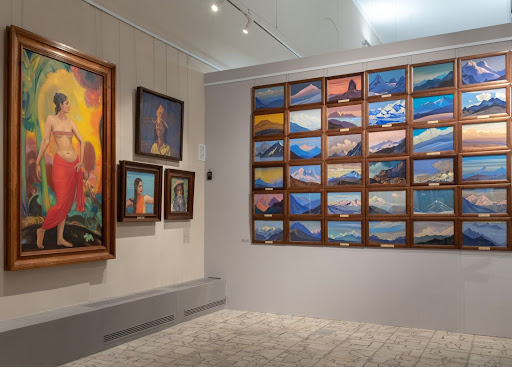
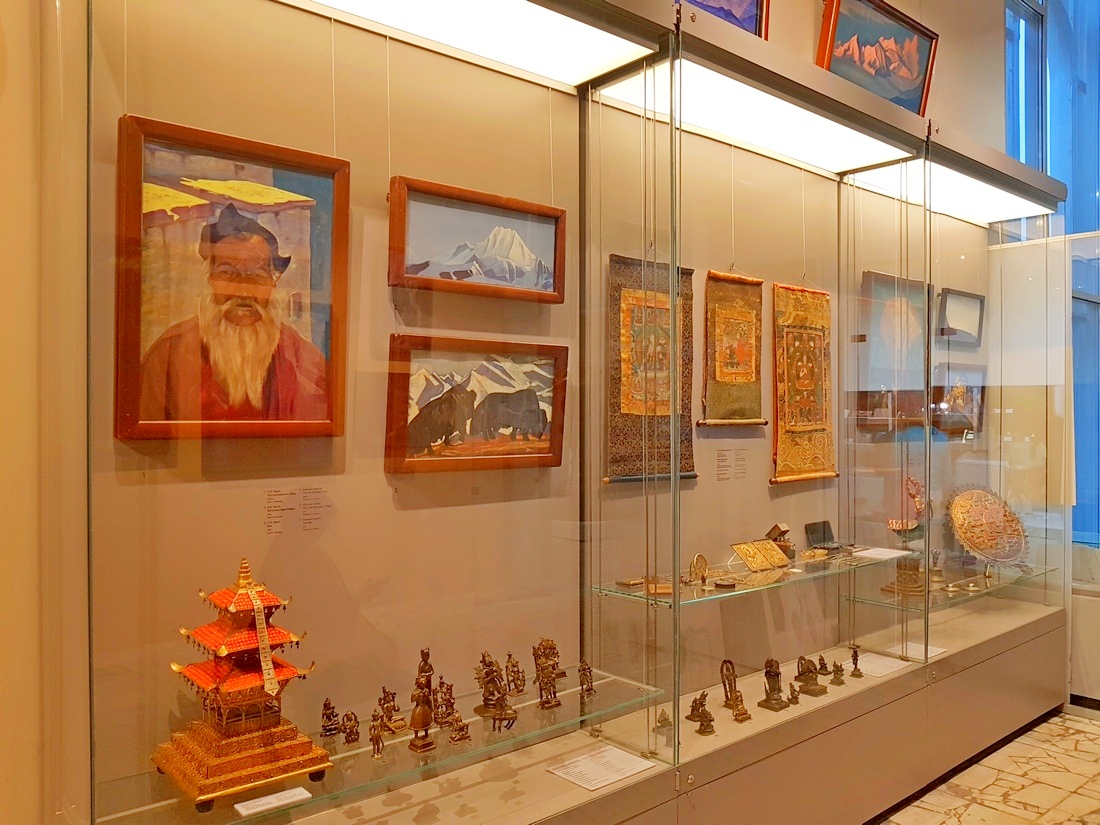
The Roerich Museum is a branch of the State Museum of the East, dedicated to preserving and publicly presenting the artistic, cultural, and philosophical legacy of the Roerich family. The museum’s collection comprises over 800 paintings and graphic works by Nikolai Konstantinovich and Svyatoslav Nikolaevich Roerich, together with an extensive assembly of decorative and applied arts from Russia, India, China, Tibet, Mongolia, Egypt, and other countries. A distinct portion of the holdings consists of memorial items belonging to members of the Roerich family, and the museum also preserves an archival collection of their literary heritage, including documents relating to their lives and activities and materials from Roerich‑related organisations. The museum regularly hosts exhibitions, scientific seminars, conferences, and round tables on subjects such as Roerich studies, art history, the preservation of cultural monuments, and ecology, and it maintains a lecture hall where both staff and invited specialists give talks.
Nikolai Konstantinovich Roerich (1874-1947) was a leading Russian artist, academician of the Imperial Academy of Arts, writer, archaeologist, traveller, and thinker, and a prominent figure of the Silver Age. His wife, Elena Ivanovna Roerich (1879-1955), was a Russian philosopher, translator of Theosophical works, participant in the Central Asian expedition, and co‑founder of the teaching known as “Living Ethics.” Their son Yuri Nikolaevich Roerich (1902-1960) was an outstanding orientalist, author of a multi‑volume dictionary and director of the Himalayan Institute “Urusvati”; he returned to the USSR in 1957 and donated a significant portion of his father’s works. Their other son, Svyatoslav Nikolaevich Roerich (1904-1993), was a distinguished Russian and Indian artist and public figure, an honorary member of the Academy of Arts of the USSR, who transferred his parents’ legacy to the USSR to facilitate the creation of a comprehensive museum institution. All four members of the Roerich family made invaluable contributions to Russian and global culture in the fields of art, science, and philosophy. Nikolai Roerich authored the international Treaty on the Protection of Cultural Property (the Roerich Pact, 1935), thereby becoming one of the founders of the modern system for heritage preservation; he also led the Central Asian expedition (1924-1928) and founded the Himalayan Institute of Scientific Research “Urusvati” in India. Svyatoslav Roerich worked to promote his father’s oeuvre and to develop Russian–Indian cultural cooperation, while Yuri, after returning to his homeland, helped revive the Russian school of Buddhology.
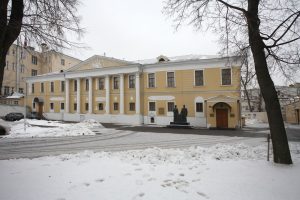
Address: Moscow, Maly Znamensky lane, 3/5, building 4, 5, 7