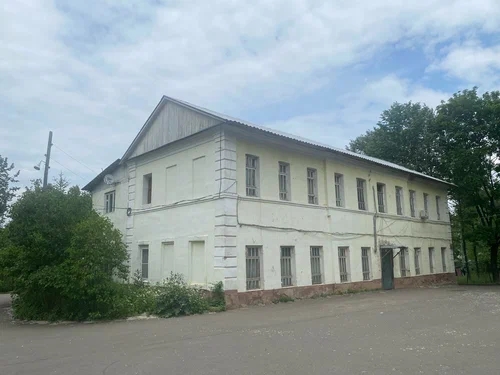
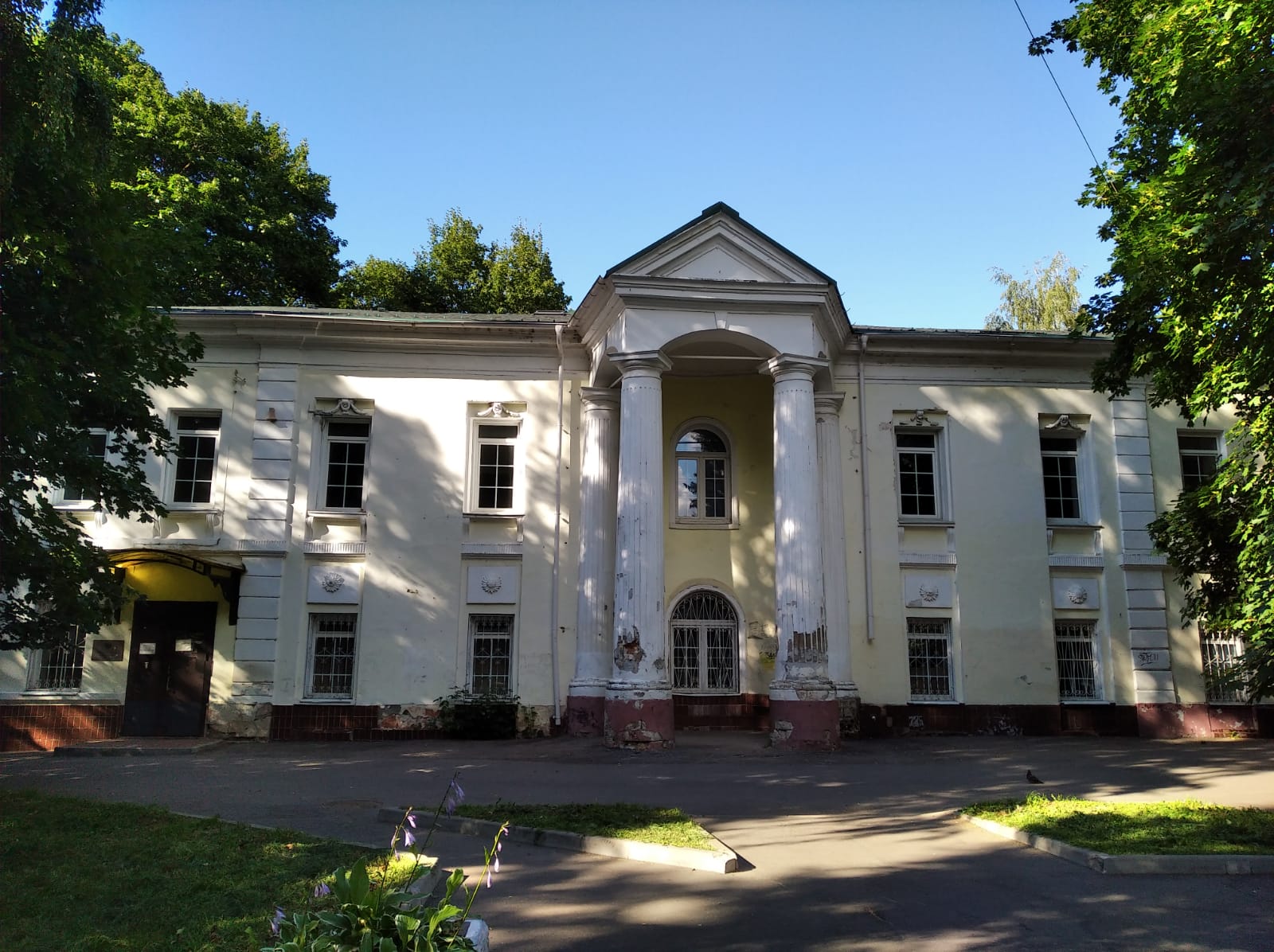
Еstate of Sukhovo-Kobylins Voskresenki, Main House,1875
The history of the village Voskresenskoe, known in Soviet times as Ptichnoe, is inextricably linked with the history of the estate of the same name. Its origins lie in the local church that gave the settlement its name-a classic example of Central Russian toponymy. The first mentions of the church site, where a temple would later be built, appear in land registry records from 1627. Nearby was the village of Teterevlevo. In the late 16th century, these lands belonged to Fyodor Melentiev, and by 1627 they had passed into the possession of Prokofy Patrikeevich Bestuzhev and later his son, Mikhail Grigorievich Bestuzhev-Ryumin. In 1678, two estate homesteads with a population of nine people were recorded here. After Mikhail Grigorievich’s death, the estate was inherited by his son, Pyotr Mikhailovich Bestuzhev-Ryumin (1664-1743), a prominent statesman of the Petrine and post-Petrine eras. He served as a governor in Simbirsk (1701), carried out diplomatic missions for Peter I in Vienna and Berlin (1705), and was later appointed as Ober-Hofmeister to the court of Anna Ioannovna, the Duchess of Courland. His career was marked by dramatic rises and falls, political intrigue, and temporary disfavor. However, he, along with his sons, was eventually elevated to the rank of count by Empress Elizabeth Petrovna (1742). It was during Pyotr Mikhailovich’s ownership that a quarter-century-long land dispute with Moscow’s Simonov Monastery was finally resolved. By decree of the Patriarchal Treasury Prikaz in 1698, Bestuzhev received the lands as a perpetual possession on the condition that he build a church there within two years. The condition was met precisely: in 1701, the wooden Church of the Resurrection of Christ was consecrated, and around it, the village of Voskresenskoe (also known as Teterkino) took shape. After Pyotr Mikhailovich’s death, the estate was divided among his sons. Voskresenskoe, along with the village of Alekseevskaya, went to Mikhail Petrovich, a diplomat who died childless. In 1763, his brother, Chancellor Alexei Petrovich Bestuzhev-Ryumin, sold the village to Lukyan Ivanovich Kamynin. During his ownership, in 1783, a bell tower and a narthex were added to the church. At the turn of the 19th century, the estate was purchased by Second Major Alexander Vasilyevich Sukhovo-Kobylin-the grandfather of the famous playwright. The estate’s heyday is associated with his son, Vasily Alexandrovich Sukhovo-Kobylin (1782-1873). Under him, the main house with wings was constructed (surviving to this day in an altered form), and an extensive park with linden alleys was laid out. In this estate, his son-the classic Russian writer Alexander Vasilyevich Sukhovo-Kobylin (1817-1903)-spent his childhood and youth. Here he worked on his literary works and managed the estate’s affairs. In 1857, the Sukhovo-Kobylin family sold the estate to the merchant Sitnikov. After that, owners changed frequently. The last pre-revolutionary owner was Sergei Vasilyevich Glinsky. After the revolution, the estate’s fate changed drastically: in 1938, the Voskresenskaya Church was destroyed, and a large poultry farm was established on the estate grounds. In its honour, the village received its new name-Ptichnoe. The former manor house became the administration building of the state farm. During the Great Patriotic War, a military factory operated in the incubator building. Today, remnants of the once-rich historical and cultural complex include: the altered main manor house, one of the wings, the manager’s house, various outbuildings, and fragments of the park with remains of a linden alley and several old larches and firs.
Address: Moscow, Tsentralnaya Usadba str., 1A