Staro-Nikolskoye Еstate
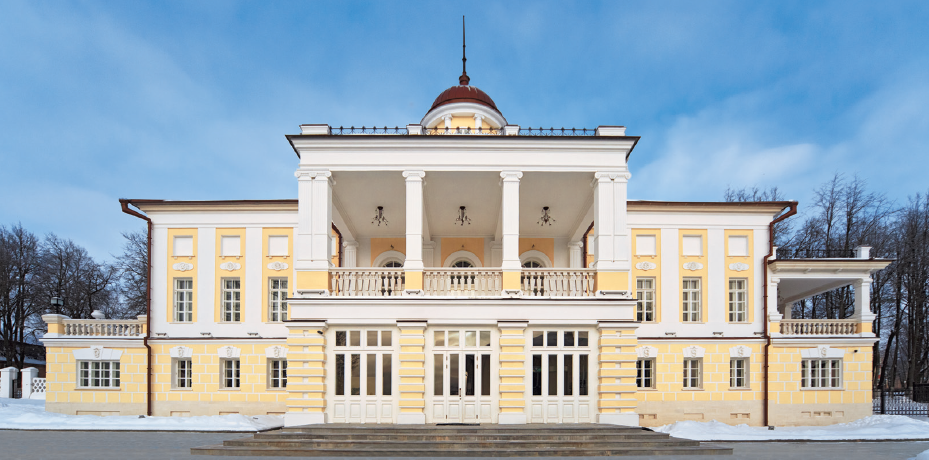
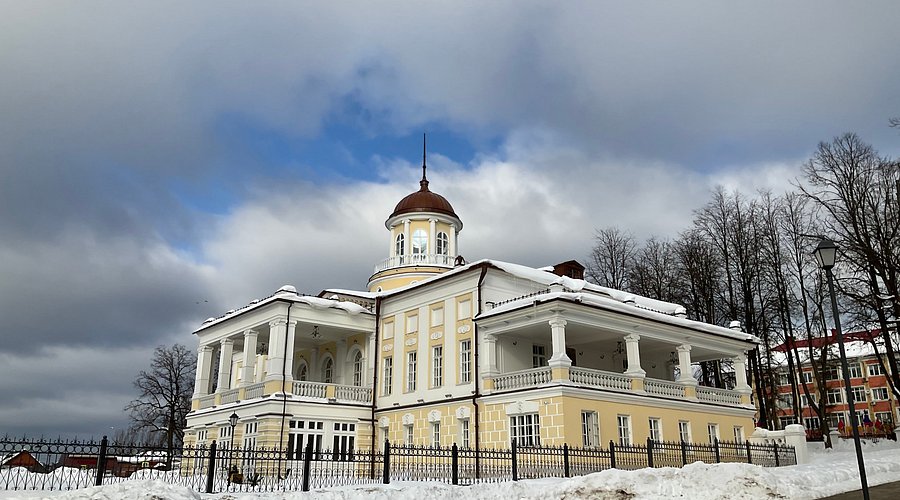
Staro-Nikolskoye Estate was founded in 1660 on the left bank of the Desna River by Boyar Fyodor Mikhailovich Rtishchev, a close associate of Tsar Alexei Mikhailovich, on the lands of the abolished St. Nicholas Monastery. Until the end of the 18th century, the estate belonged to the Rtishchev family, then passed to the Musin-Pushkins, and later to the entrepreneurs Krygin and Berg. From the late 19th century until 1917, the owners were representatives of the merchant class. In the summer of 1928, the estate’s main house became the venue for the 6th Congress of the Communist Party of China, a pivotal event in the history of the People’s Republic of China. In 2011, a severe fire damaged the building, leaving it in an emergency, dilapidated state. In 2013, the estate was leased for 49 years to the Chinese Cultural Centre. From late 2015 to mid-2016, comprehensive restoration works funded by the centre were carried out, fully reviving the architectural monument. The restoration concluded with the opening of the Museum of the 6th CPC Congress on July 4, 2016. That same year, the project received the Moscow Government’s «Moscow Restoration» award in the categories “For Best Organization of Restoration Work” and «For Scientific and Methodological Guidance and Research Work». The architectural ensemble developed in several stages: in the 1770s-1780s, a classic estate complex took shape; in the 1820s-1830s, the estate was rebuilt in the late Empire style, gaining a two-story volume with a belvedere and the coat of arms of the Musin-Pushkins; in the late 19th – early 20th centuries, further reconstructions of the porticos and facades were carried out. During the Soviet period (1935-1946), the building was adapted for residential use, resulting in the loss of the belvedere, the original layout, and the marble staircase. The restoration of 2015-2016 involved the dismantling of later additions, structural reinforcement, and the reconstruction of the belvedere with its spire, the marble staircase, façade decor (pilasters, stucco, cornices), and interiors. Historical window frames and floor coverings were restored based on discovered fragments and analogues.
Address: Moscow, Parkovaya St., 18