Estate «Sviblovo»
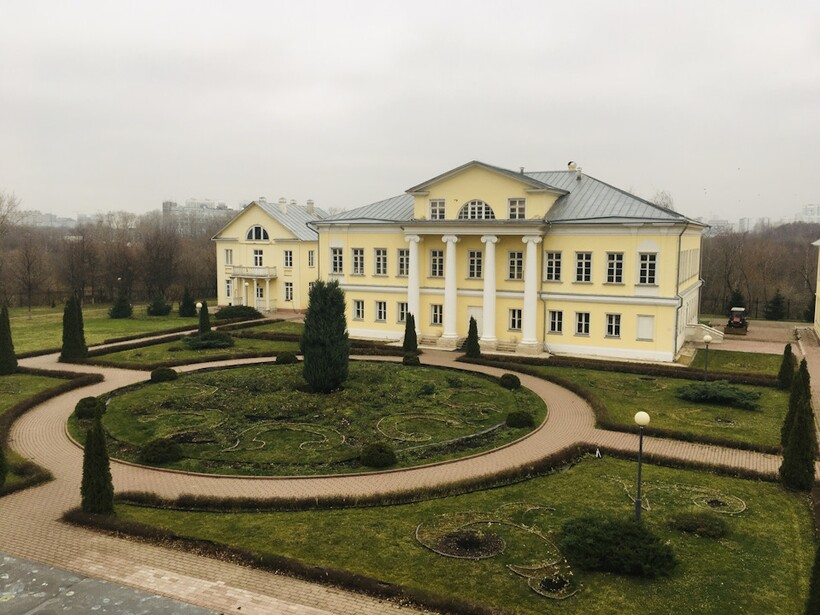
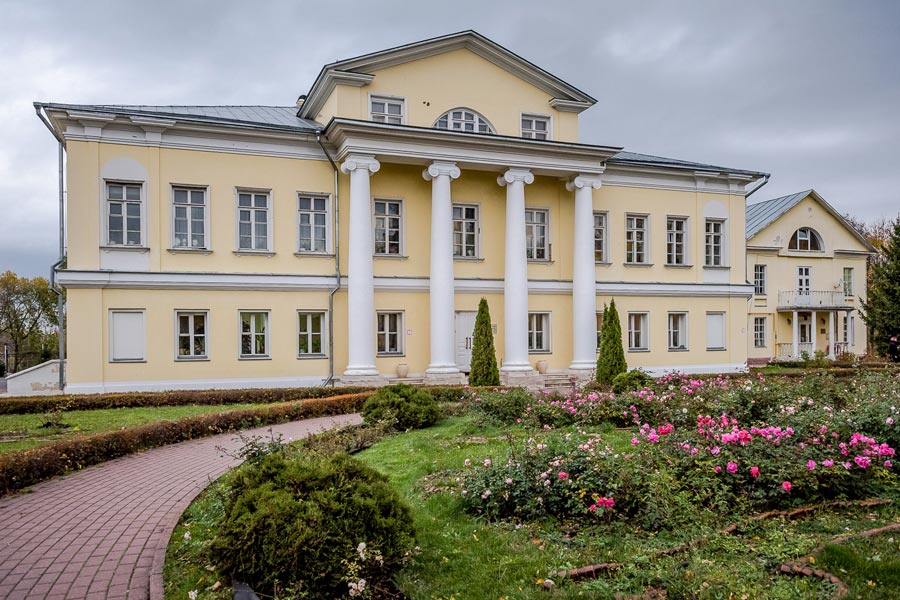
The Sviblovo estate complex is located on the high right bank of the Yauza River. The first chronicle mention of the village dates back to 1432, when these lands belonged to the boyar Fyodor Semyonovich Svibla (Svibl), an associate of Grand Duke Dmitry Donskoy. The estate’s name derives from his nickname. In the 16th-17th centuries, the estate was owned by the Pleshcheyev nobles, who received it as a reward for participating in the defense of Moscow. Under them, Sviblovo took shape as a noble hereditary estate. The beginning of stone construction was laid by Kirill Alekseevich Naryshkin, the Moscow governor and a relative of Peter I (he was Peter’s first cousin once removed). In 1704, he erected a two-story manor house in the Petrine Baroque style – architecture of this period is characterized by restrained decoration, clarity of lines, and European influences. At the same time, in 1708-1709, the stone Church of the Life-Giving Trinity was built, also in Baroque forms. Later, a malt factory and a serf theater, famous for its horn music orchestra, appeared at the estate. According to legend, after the Battle of Poltava (1709), Naryshkin settled captive Swedish craftsmen in Sviblovo, and one of the bells of the Trinity Church had Swedish origins. In 1723, the estate returned to the Pleshcheyevs, and in 1745 it passed by inheritance to the Golitsyn princes. In the 1770s, the widow of Prince Pyotr Golitsyn sold the estate to General-Lieutenant Nikolai Petrovich Vysotsky. This period is considered the heyday of the estate. Under Vysotsky, the main house was supplemented with two wooden wings, and a servants’ (guest) wing was also built – the only wooden structure from that time to survive to this day. In 1801-1803, the historiographer Nikolai Mikhailovich Karamzin lived nearby, in Sviblovo. Here he began work on his fundamental work “The History of the Russian State.” These years were overshadowed by personal tragedy: in 1802, his wife Elizaveta Ivanovna Protasova died. In 1821, the owner became Ivan Petrovich Kozhevnikov, a merchant of the first guild. Under him, the estate underwent a significant reconstruction in the Classicist style. The main house acquired features that have survived to this day: a portico with colonnade, a mezzanine, and strict symmetry of the facade. Kozhevnikov set up a cloth factory on the territory, equipped with English machinery, which in the 1820s-1830s led to the area being densely built up with production buildings and workers’ housing. At the same time, the owner, known as a music lover, arranged concerts at the estate, accessible even to factory workers. In 1870, the estate was acquired by mining engineer Georgy Khalatov, who owned it until the 1917 revolution. During the Soviet period, the estate fell into neglect. The Trinity Church was closed in 1938 and later partially destroyed. The main house was unused; the wings housed workshops. The territory became a construction rubble dump. In the 1980s, measurements of the main house were carried out, but restoration never began. In 1994, the building was completely destroyed by fire. Restoration of the estate began after the complex was transferred to the Russian Orthodox Church in the mid-1990s. In 1995, services resumed in the Trinity Church. The reconstructed main house now houses the Orthodox School named after St. Sergius of Radonezh. Thus, the modern appearance of the estate combines features of two architectural eras: Baroque from the early 18th century (the church) and Classicism from the first third of the 19th century (the main house with colonnade and wings).
Address: Moscow, Lazorevy ave., 15, building 1