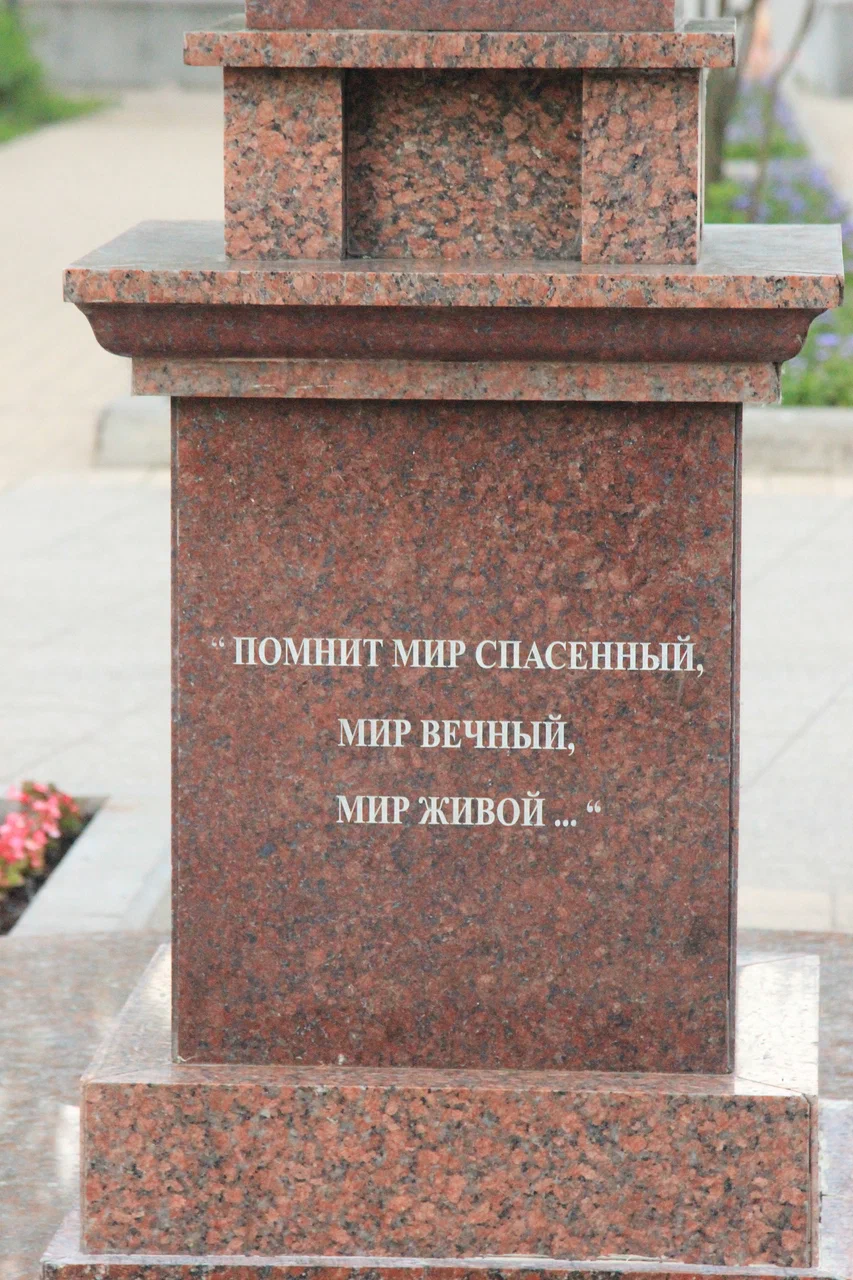
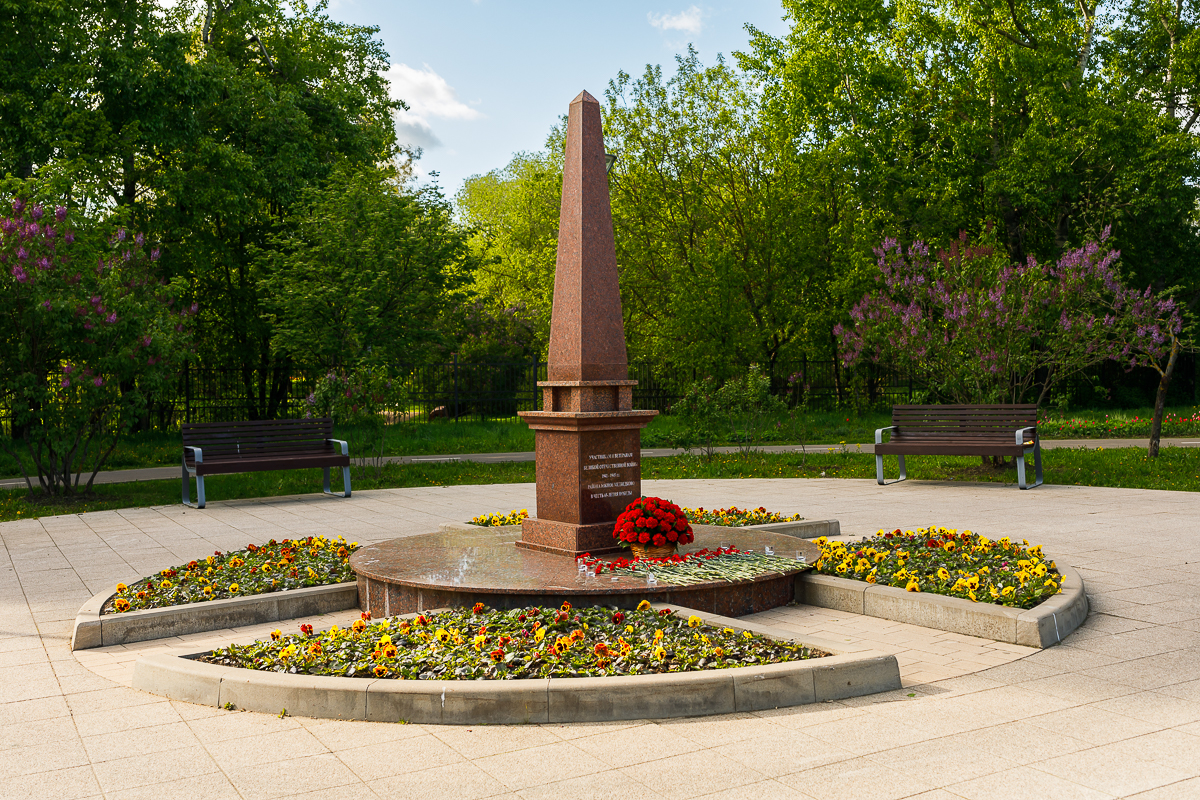
Monument to participants and veterans of the Great Patriotic War of 1941-1945
Moscow entered the Great Patriotic War as the country’s largest industrial and cultural center, where on the eve of June 22, 1941, more than 4 million people lived. From the first days of the war, the capital turned into a military camp: out of 4.5 million residents, only 2.5 million remained by autumn, while about 850 thousand Muscovites – every fifth resident of the city – went to the front, and nearly 400 thousand of them never returned. In the very first days of the war, 350 thousand people voluntarily enlisted in the active army, and in July 1941, another 150 thousand residents joined the ranks of the people’s militia – a total of 16 divisions were formed with over 150 thousand people. Those who remained in the city – women, the elderly, and teenagers – at the cost of incredible efforts built powerful defensive structures on the approaches to the capital: 676 kilometers of anti-tank ditches, 445 kilometers of escarpments, 410 kilometers of tank obstacles, 1,400 kilometers of forest debris, over 1,350 kilometers of barbed wire entanglements, more than 46 thousand anti-tank hedgehogs, and about 31 thousand firing points – over 3 million cubic meters of earth were excavated, with three-quarters of the builders being women and teenagers. At the same time, industry worked at its maximum capacity: the Moscow Automobile Plant began producing Shpagin submachine guns; factories supplied the front with 3,545 Katyusha rocket mortars, 16 thousand combat aircraft, 72 thousand mortars, more than 2 thousand tanks and self-propelled guns, and 34 million shells and mines; moreover, every eighth Soviet aircraft and every third submachine gun were produced in Moscow. The capital’s skies were defended by 600 fighters, 1,044 anti-aircraft guns, and 336 machine guns, while metro stations became shelters for tens of thousands of women and children – during air raid alerts, 221 children were born in the underground. In October 1941, when the enemy was at the gates, Moscow was declared under a state of siege, but on November 7, the legendary military parade took place on Red Square, and on December 5-6, Soviet troops launched a counteroffensive, pushing the enemy back 100-250 kilometers and dispelling the myth of the German army’s invincibility. For their combat exploits, more than 800 Muscovites were awarded the title of Hero of the Soviet Union, and the capital itself 60 years ago received the honorary title of “Hero City” – recognition of the colossal price paid by its residents for the Victory.
Address: Moscow, Pevchesky Pole Park