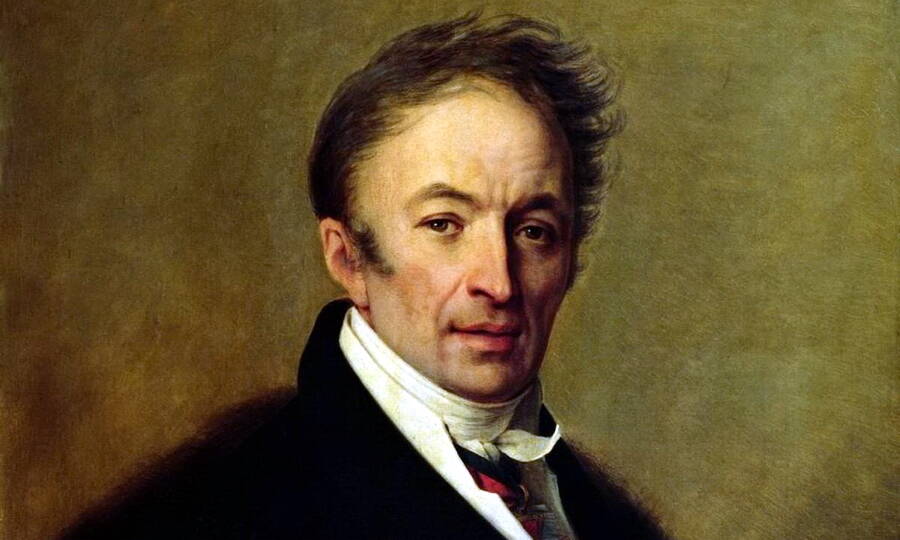
Nikolai Mikhailovich
Karamzin
1766-1826
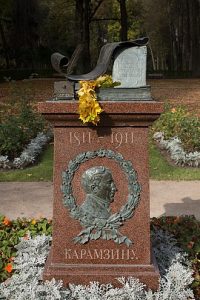
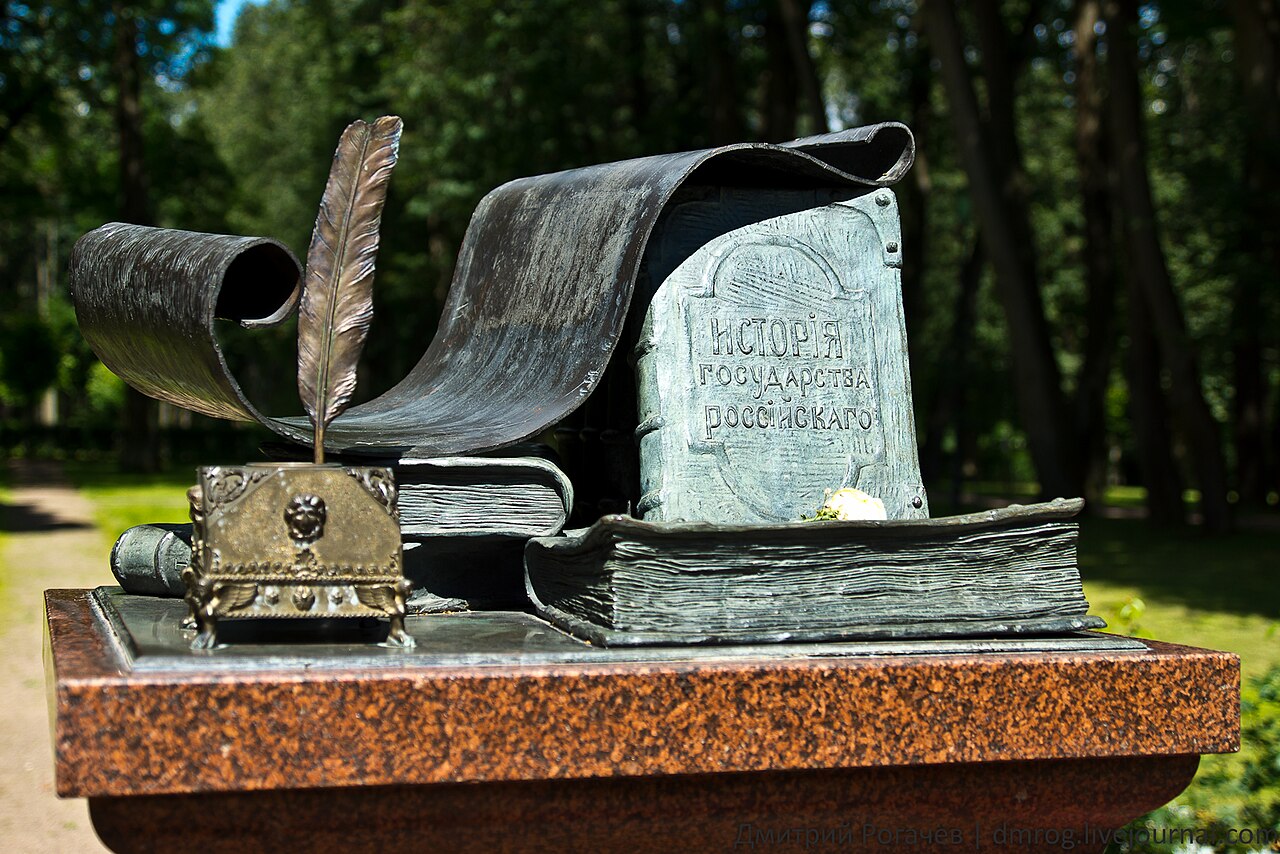
Nikolai Mikhailovich Karamzin was a Russian writer and historian, an Active State Councillor, an honorary member of the St. Petersburg Academy of Sciences (from 1818), and the sole official historiographer of the Russian Imperial Court (from 1803). He is considered the founder of Sentimentalism in Russian literature, a movement which marked a turn towards emotionality and psychological depth in artistic creation. Karamzin carried out a fundamental reform of the Russian literary language, making it more flexible, melodious, and expressive, which allowed for the conveyance of the subtlest nuances of inner feeling. His monumental historical work, The History of the Russian State, served for decades as the primary source of knowledge on national history for several generations of educated society, exerting a colossal influence on the formation of national consciousness.A monument in honour of Nikolai Karamzin was installed at the Ostafyevo estate. The sculptural composition, erected on a granite pedestal, presents an allegorical embodiment of Karamzin’s intellectual legacy. The open books carved from stone symbolise the seven volumes of The History of the Russian State, which became the pinnacle of his literary work. The scroll, casually unfurled on the pedestal, personifies the eighth volume, on which Karamzin laboured in the final years of his life. An inkwell and a quill pen, indispensable attributes of a writer’s work, emphasise the intellectual atmosphere that prevailed at the Ostafyevo estate, where Karamzin devoted himself to his historical research. This composition not only visualises the historian’s labour but also accentuates the connection between Karamzin’s genius and the place where it was most fully realised. The author of the monument was Academician Nikolai Zakharovich Panov, who brought his design to life at the St Petersburg workshop of Guido Nelli. The official unveiling of the monument took place in 1911 on the initiative of Count Sergei Dmitrievich Sheremetev, the owner of the Ostafyevo estate, who thereby expressed his profound respect for the memory of the great historian and his contribution to Russian culture. This event became a significant milestone in the history of the estate, cementing its status as a place associated with Karamzin’s name. On one face of the granite pedestal, lines from a letter by Nikolai Mikhailovich Karamzin to Nikolai Ivanovich Krivtsov are immortalised, imbued with a deeply personal sentiment towards Ostafyevo: “Ostafyevo is memorable to my heart: there we enjoyed all the pleasures of life, and also grieved not a little; there flowed the middle, perhaps the best, years of my life, dedicated to family, labours, and feelings of general goodwill, in the tranquillity of turbulent passions.” This quotation, as if plucked from personal correspondence, reveals Karamzin’s state of mind, his attachment to the estate, which became for him not only a place of work but also a source of inspiration and inner peace. The second face of the pedestal is adorned with a bas-relief depicting Nikolai Mikhailovich Karamzin and the inscription “1811-1911”. These dates, which naturally raise questions, are explained by the fact that the historian’s life spanned the period from 1766 to 1826, while his residence at Ostafyevo is dated to 1804-1815. The answer lies in the book by Pavel Sergeevich Sheremetev, Karamzin at Ostafyevo. 1811-1911, published in 1911. Thus, the dates featured on the monument refer to the anniversary recorded in the book’s title, rather than to a specific stage of Karamzin’s biography. The monument, therefore, stands not only as a tribute to the eminent historian but also as a symbol of the perpetuation of his legacy at Ostafyevo, reflecting historical memory.
Address: Moscow, Troitskaya St., 1A