Izmalkovo Еstate
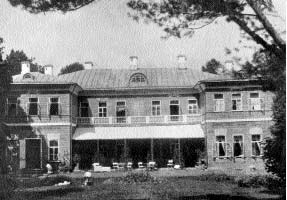
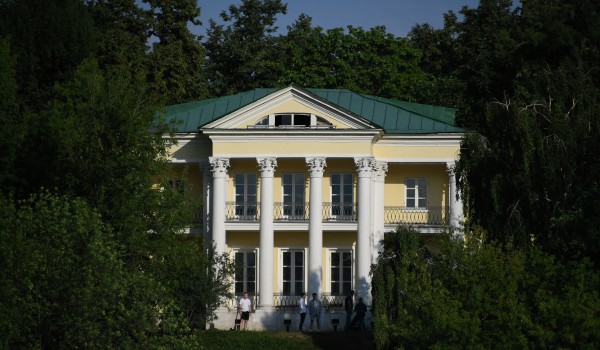
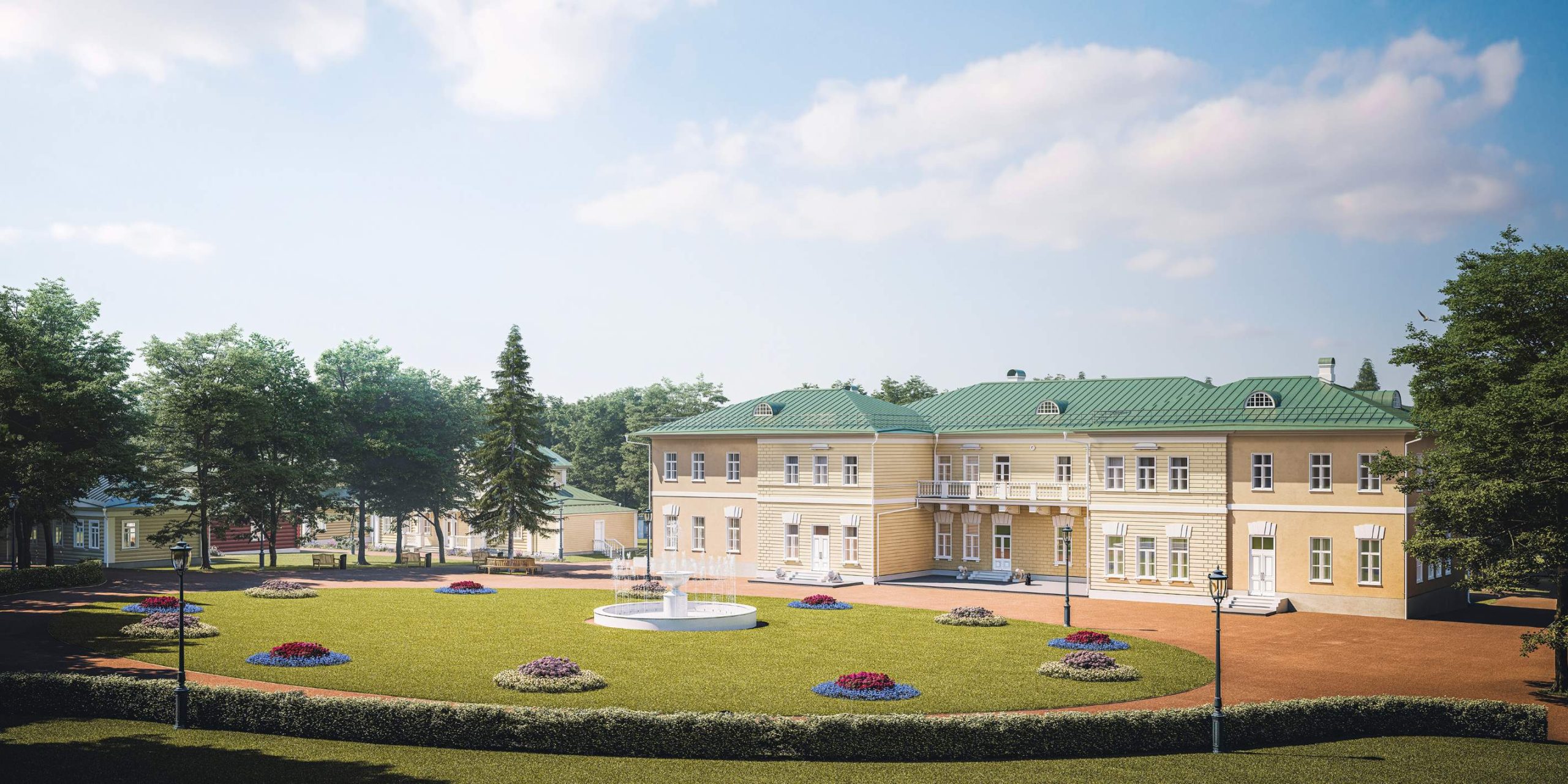
Izmalkovo is a former estate of the Samarin family, located near Moscow and dating from the 18th to the early 20th century. Its ruins are situated in the Vnukovskoye settlement of the Novomoskovsky Administrative District of Moscow, near the Peredelka River. The formation of the architectural complex began in the second half of the 18th century. In 1830, the estate was acquired by Active State Councillor Fyodor Vasilyevich Samarin, after which its active reconstruction began. From the earlier period, only the stone Church of Dmitry of Rostov (1757) remained. The centerpiece of the ensemble was a two-story wooden house in the Empire style, plastered to resemble stone. Its façade was adorned with a large balcony supported by six Doric columns. On either side of the house stood two single-story log wings. The estate was surrounded by an extensive linden park with a mixed layout (both formal and landscape), one border of which was formed by a large flowing pond known as Samarin Pond. The Samarin house was renowned for its rich library and collection of paintings and engravings. The owners-Yury Fyodorovich Samarin, the spouses Vera Fyodorovna Samarina-Komarovskaya and Vladimir Alexeyevich Komarovsky-left behind a series of picturesque views of the estate. The family archive was also kept here, including documents on the estate’s history, household ledgers, correspondence, and memoirs. From 1840 to 1844, Y.F. Samarin lived almost continuously at Izmalkovo while working on his master’s dissertation, Stefan Yavorsky and Feofan Prokopovich, which he successfully defended in 1844. The estate was famous for its hospitality; visitors included representatives of well-known noble families such as the Meshcherskys, Aksakovs, Gagarins, Mamontovs, Polenovs, and others. After the death of Y.F. Samarin, the family archive (over 1,300 items) was transferred to the Rumyantsev Museum. Following nationalization in 1917, the last owners, the Komarovskys, were evicted in 1923, and a children’s tuberculosis sanatorium was established in the estate. Most of the property was lost, the library was sold and ended up at Prague University, and the Church of Dmitry of Rostov was demolished in the early 1930s. Several antique bookcases from the late 18th century were moved to the Bolshiye Vyazyomy estate museum, where, after restoration, they can be seen in the Russian library. Two sculptural lions from the main entrance staircase were relocated in the 1970s to the Arkhangelskoye estate. The main house has survived in a ruined state, having lost its original layout and façades. The park has been significantly reduced and neglected, and the estate ponds have not been preserved. In 2019, a project for the reconstruction, restoration, and adaptation of the Izmalkovo estate complex into a boarding house was approved. The plan includes recreating the historical appearance of the façades, decoration, and interiors of the main house while preserving later brick extensions.
Address: Moscow, Lermontov St., 13, building 1